(It appears in official documents, as both Broadland and Broadlands)
We are especially grateful to the Atkinson family for letting us see the details of the sale of the farm to the Creasey family, Wills, parish records, and newspaper articles etc were collected in research for this article and are with the History Society’s records.
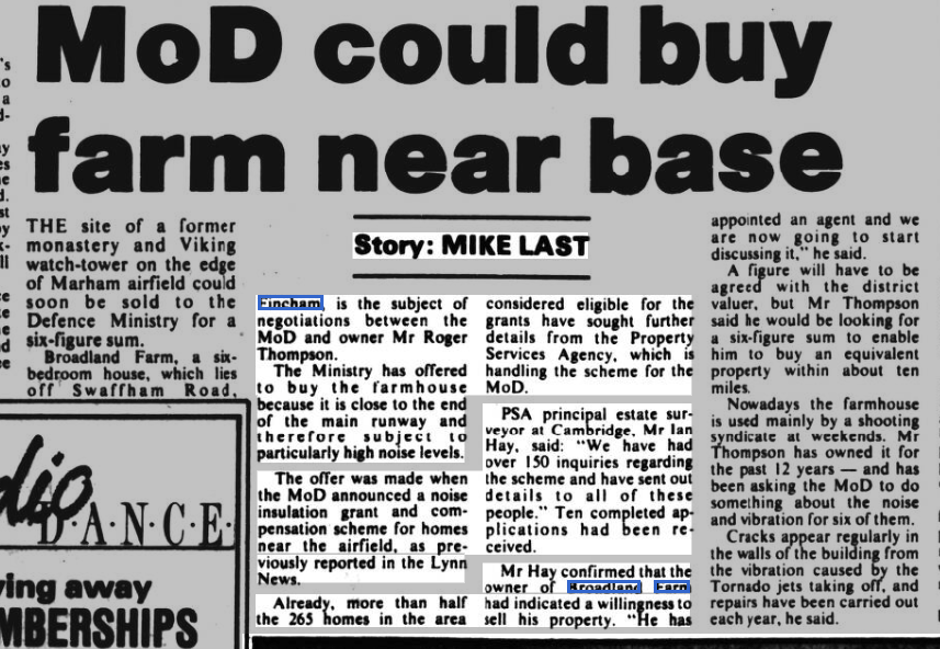
The Atkinson family were interested in the possible Viking watchtower and possible religious connections.
There seem to be no record of any religious houses on the site of Broadland Farm although it is quite possible that the land was owned and farmed by one. Either one of the local Religious Houses or one of the big land owners such as Ely Cathedral or Ramsey Abbey. Interestingly Broadlands Farm is on the old Roman Road, and the area is rich in Anglo-Saxon finds.
Before the Enclosure Acts in the late 1700s (which consolidated much of the remaining open fields system) most farms were situated in or near a village. Broadlands Farm is outside the village although still in the Parish of Fincham. The Fincham Enclosure map of 1772 show no buildings on the site apart from probably what is a barn, and it appears on no official records until the 1830s.
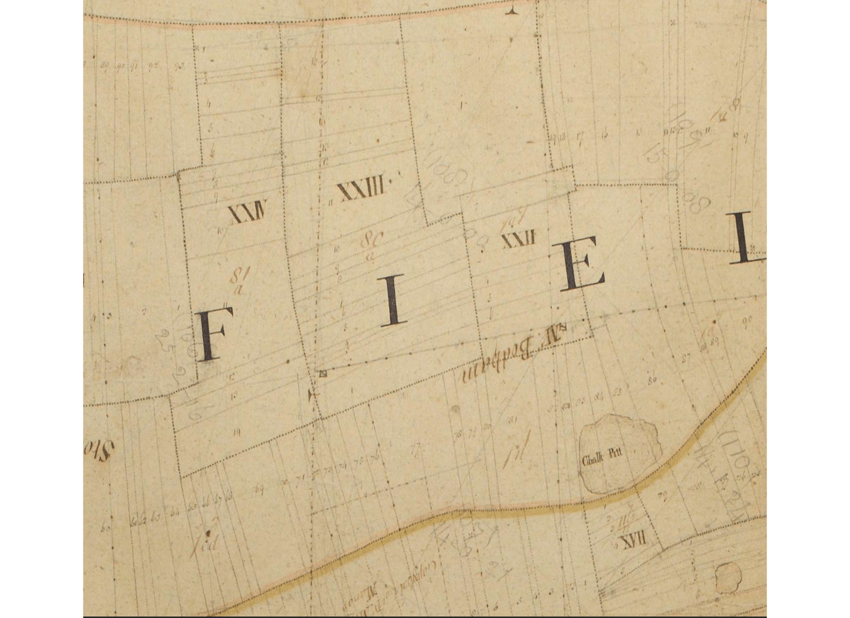
The Hare family owned most of the manors of Fincham until they sold them in the 16th century so there may be further records in the Hare Archives in the Norfolk Records Office.
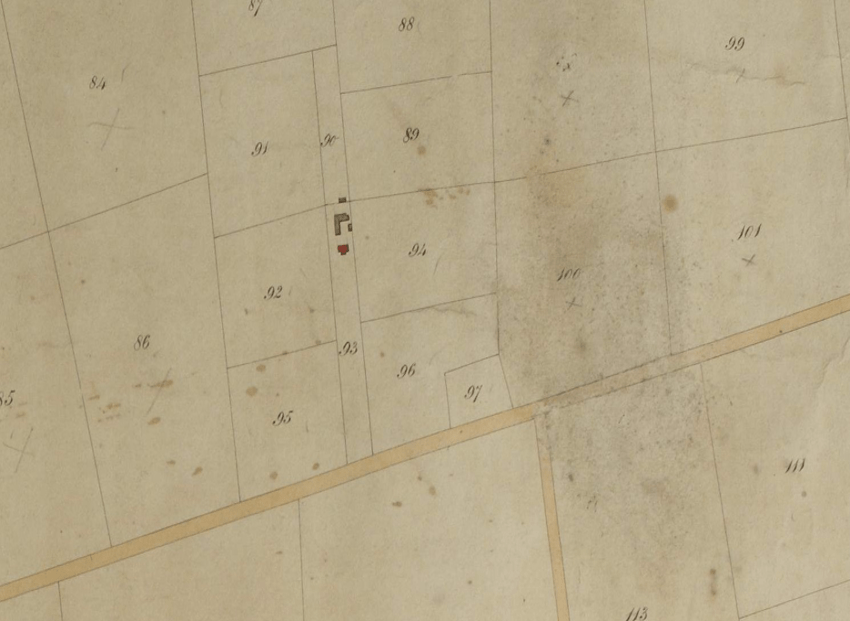
The 1839 Tithe map and apportionment
| Number | Field | Occupier | Owner |
| 85 | The Eighteen acres | John Barsham | John Barsham |
| 86 | The Nineteen acres | John Barsham | John Barsham |
| 87 | Godfreys Piece | Richard Donthorn | William John Donthorn |
| 88 | Godfreys Piece | Richard Donthorn | William John Donthorn |
| 89 | Godfreys Piece | Richard Donthorn | William John Donthorn |
| 90 | Godfreys Piece | Richard Donthorn | William John Donthorn |
| 91 | Godfreys Piece | Richard Donthorn | William John Donthorn |
| 92 | Godfreys Piece | Richard Donthorn | William John Donthorn |
| 93 | House barn Stable Yard + garden | Richard Donthorn | William John Donthorn |
| 94 | Godfreys Piece | Richard Donthorn | William John Donthorn |
| 95 | Godfreys Piece | Richard Donthorn | William John Donthorn |
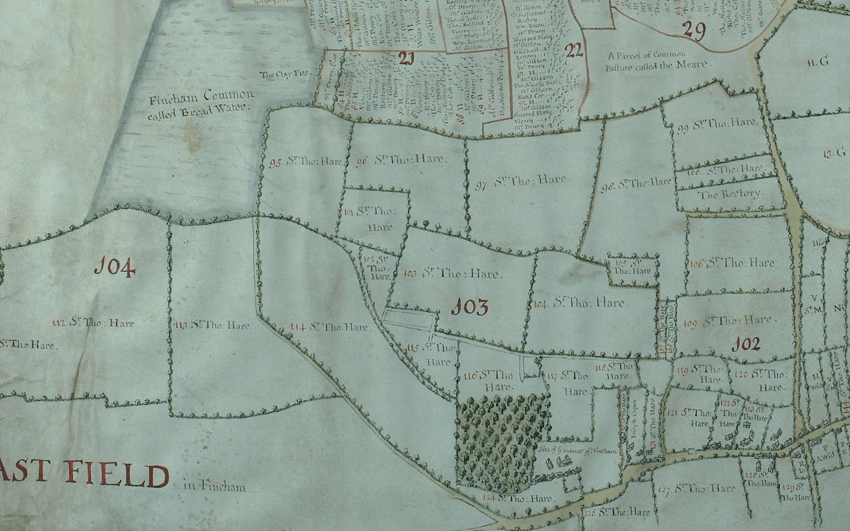
1636 Map
It is interesting that in the 1600s there was a field called Fincham Common or Broadwater opposite the site of Broadlands farm.
1636 Map
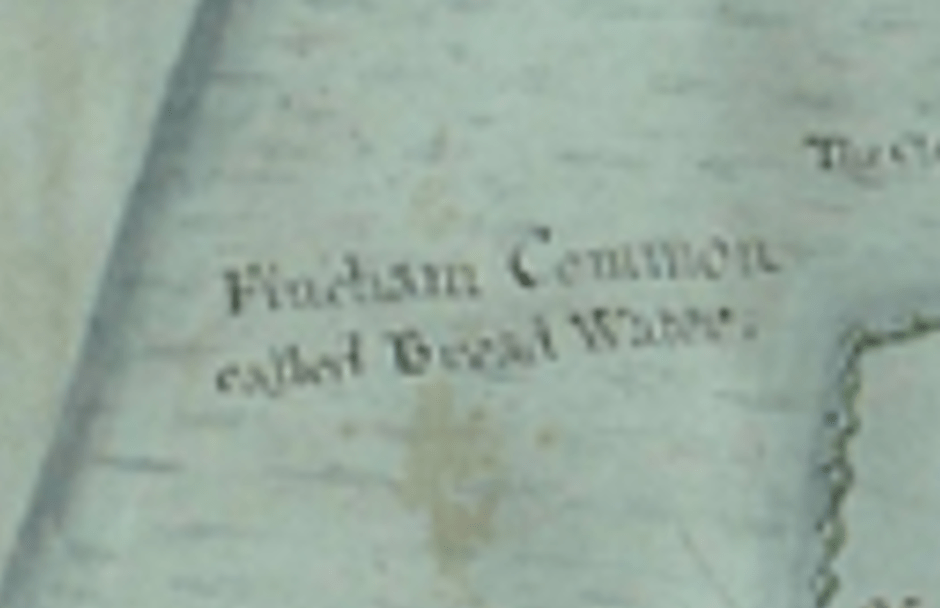
A (fuzzy) section of the 1636 map
Owners of Broadland Farm or fields

Hugh Godfrey/ John Godfrey
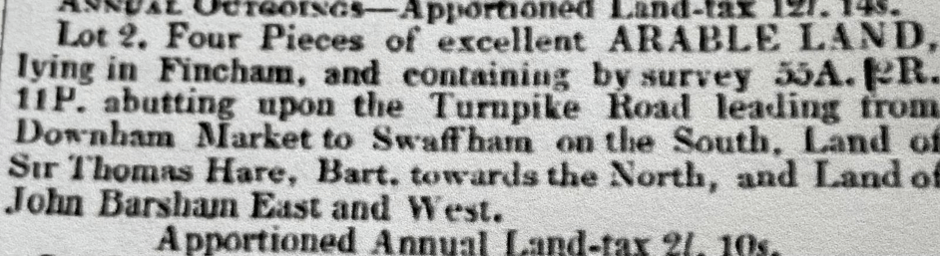
Both Hugh and John Godfry (Godfrey)were both living in Fincham at the time of their deaths and presumably gave their surname to the fields shown in the 1839 apportionment. The land was advertised for sale in 1831 and this may have been when William John Donthorne bought it.
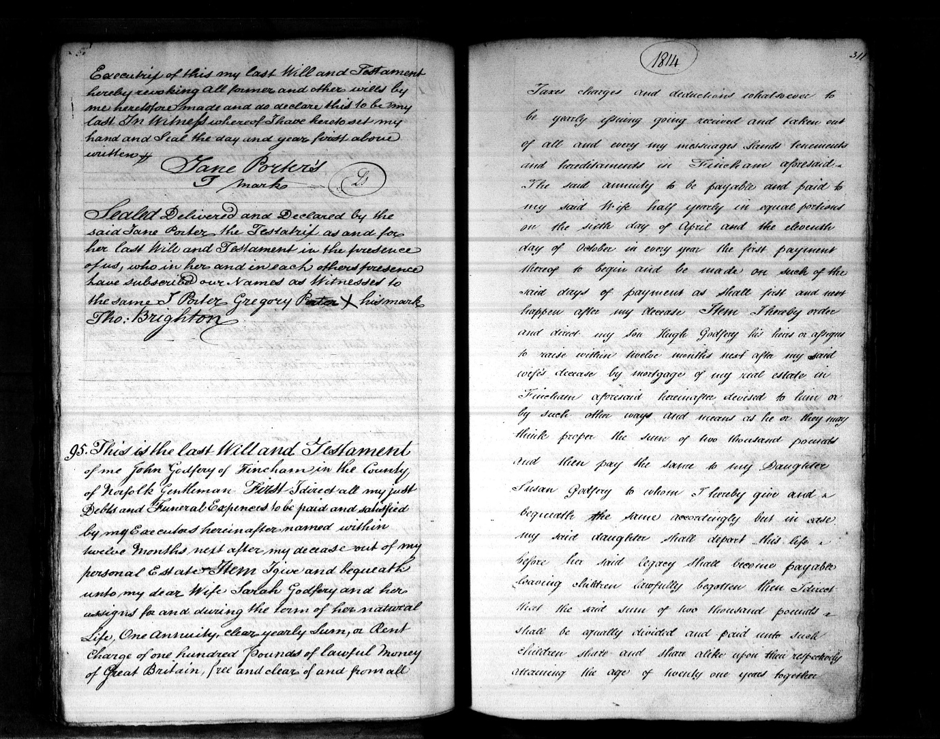
Will of John Godfrey 1814
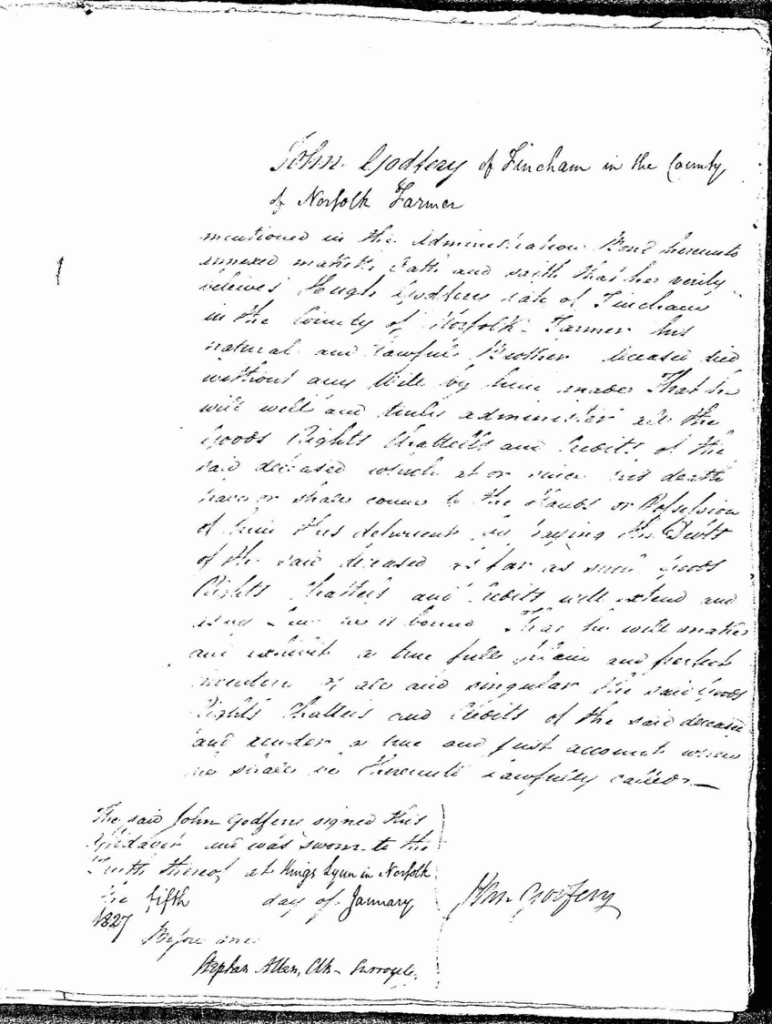
Letter of Administration for the lands of Hugh Godfrey to John Godfrey, Hugh’s brother.
For Sale 1831 Lynn News

Richard Donthorn
The 1839 the tithe map apportionment shows that the owner of the land was William John Donthorn and the occupant was Richard David Donthorn. The land was called Godfrey’s Piece
Richard was William John’s uncle and lived at Broadland Farm with his wife Jane (nee Whitfield) of Barton Bendish and his daughter Mary Ann. His son John Donthorn had died and was buried in Fincham churchyard . The witnesses at Richard and Jane’s marriage in 1833 were Mary Ann Barker and James Crome. Jane’s parents were Thomas Whitfield and Susanna Crome of Barton Bendish.
Voters lists show Richard being able to vote as the £50 occupier and William John able to vote as he owned land near the Chalk Pit in Fincham. His address is given as18 Hanover Street, Hanover Square.
William John Donthorne
William John Donthorn was a well-known architect, usually of Georgian or Gothic style houses, His office was in Hanover Square London. He designed the Workhouse at Downham and the alterations to the Rectory in Fincham. He was a founding member of what is now RIBA. A large number of his drawings are in the RIBA drawings collection, now housed at the Victoria and Albert Museum.
He designed, amongst others, the following( several of which have been demolished)
Cromer Hall, Cromer, Norfolk, 1829
Elmham Hall, Norfolk (Demolished)
Hillington Hall, Norfolk (Demolished)
Watlington Hall, Norfolk (Demolished)
Pickenham Hall, South Pickenham, Norfolk (Demolished).
improvements to Felbrigg Hall, Norfolk
Upton Hall, near Southwell, Nottinghamshire
Highcliffe Castle near Christchurch, Dorset (from 1830)
Workhouses in Ely (1837) and Wisbech (1838) (Cambridgeshire), Aylsham (1848-9) and Downham Market (Norfolk) and Oakham and Uppingham (Rutland)
Sessions House, Peterborough (1842)
Holy Trinity Church, Upper Dicker, East Sussex (1843)
The Old Rectory, Dummer, near Basingstoke, Hampshire (1850)
Home Farm, Marham, Norfolk (completed 1860). Gothic house with classical stables, all grade II listed.
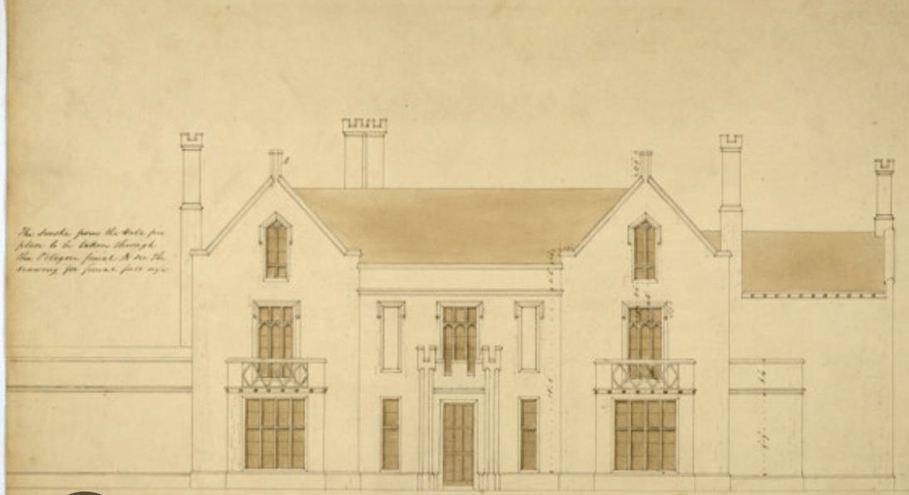
Drawing for improvements to Fincham Rectory
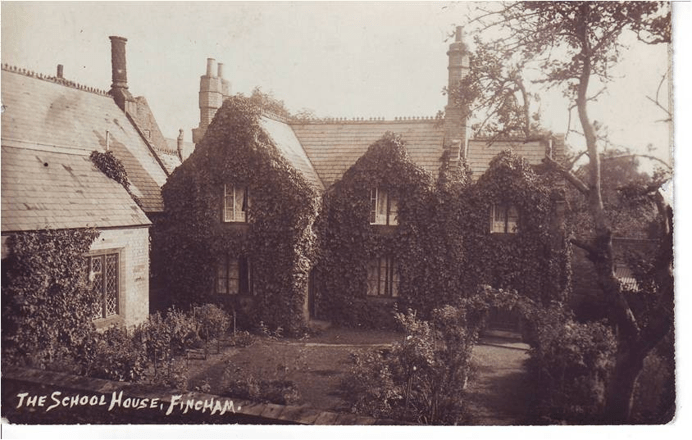
We know from Rev. William Blyth’s diaries that Donthorne visited the site of the school and perhaps it’s not too fanciful to think that he may have suggested some of the Gothic design features of the school and the schoolmasters house.
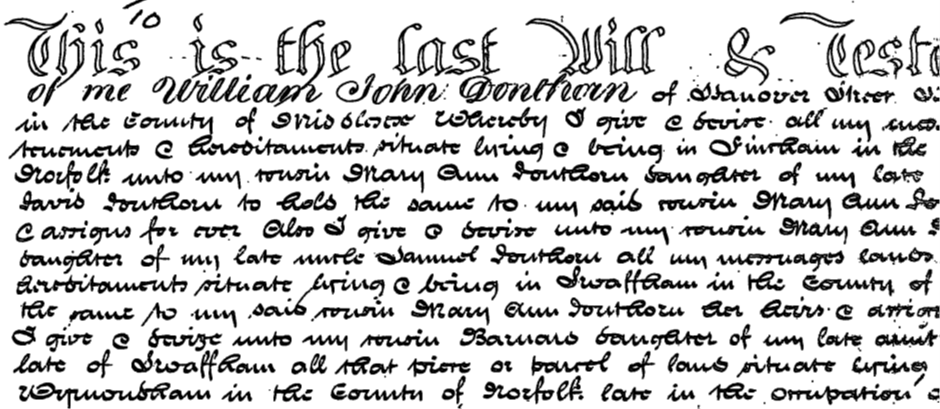
He also owned land /houses in Swaffham and Wymondham. In his will of 1859, he leaves his Fincham and Swaffham properties and land to his cousin Mary Ann Donthorn and the Wymondham ones to his cousin Elizabeth Barnard ,daughter of Rebecca Barker( nee Donthorn). Rebecca and her husband William kept the Red Lion at Swaffham.
William John Donthorne died of cancer of the stomach at the Albion Hotel Hastings and was buried at Swaffham.
Mary Ann Donthorne
Daughter of Richard David Donthorn who died in 1856 and was buried in Fincham churchyard. She is named as a farmer in the 1857 Kelly’s directory (Miss? Mrs) Mary Ann married Frederick Coe in 1860 when she was 17yrs and he was 31yrs. The witnesses at their wedding were Samuel Hayden and John Dunt. Broadlands farm is shown as owned by Donthorne and occupied by George Aylmer Jnr and then owned by Coe and occupied by George Aylmer Jnr during the 1860s. Mary Ann died in 1870 and was buried in Fincham churchyard.
Frederick Coe
After Mary Ann’s death Frederick Coe remarried twice. Firstly, to Esther Crome of Chatteris niece of James and Mary Crome of Barton Bendish, in 1873. Their son John Donthorn Coe was born in 1876. T
The 1851 show Esther living with James and Mary Crome in Barton Bendish. She is a teacher The 1871 census shows her as a visitor staying Broadland Farm.
Esther died in 1885 and Frederick remarried in 1886 to Marie Elizabeth Hayden.
Frederick died in 1887 and his will left his property to Rev John Donthorn Coe (with instructions for the executors to look after his stepmother Marie Elizabeth)
John Donthorn Coe
His mother died when he was 9 years old and his father died when he was 11. It looks as if he went to live with his stepmother Marie Elizabeth with her brother ,the bank manager of Bank House Downham Market. He became a curate in London but died of TB in 1905 when he was 30 in a sanatorium in Wells, Somerset. His father’s estate was held in trust for him until he was 25.
John died 24th October and is buried in Fincham churchyard. His lands are left to Walter John Hayden for his lifetime and then to his daughter Dora on his death.
Will dated October 25th, 1905
“I give and devise unto the said Walter John Hayden for life the estate known as Broadlands Farm in the parish of Fincham Norfolk aldo the 10 cottages at Black Drove and the land adjoining thereto now farmed by Thomas Smith in the parish of Fincham aforesaid (which properties are subject to my stepmother Marie Elizabeth Coe) and after the death of the said Walter John Hayden I give and devise such property unto Emily Lucy Hayden (wife of the said Walter John Hayden) for life and after the death of the survivor of them I give and devise such property unto Dora Ravenshaw Hayden daughter of the said Walter John Hayden for her own absolute use.”
Walter John Hayden
Died in 1926 and his will proved in 1928. The property was left to his only child, his daughter Dora
Dora Ravenscroft Hayden
Dora Ravenscroft Bird , her husband Cyril Frederick Bird died in 1917 . She then married William Cornish Lloyd and when she succeeded to the property she sold the Farm to Benjamin Creasey. She died in Brighton in 1971.
The land may have been farmed by the Creaseys before he bought it in 1928. His will leaves the farm to whoever survives him.
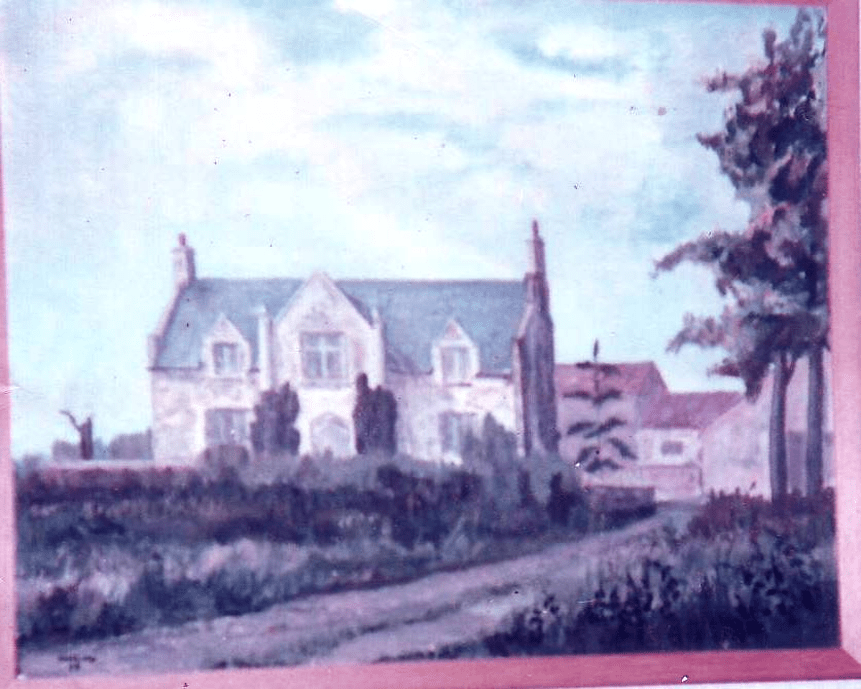
An early painting of Broadlands Farm
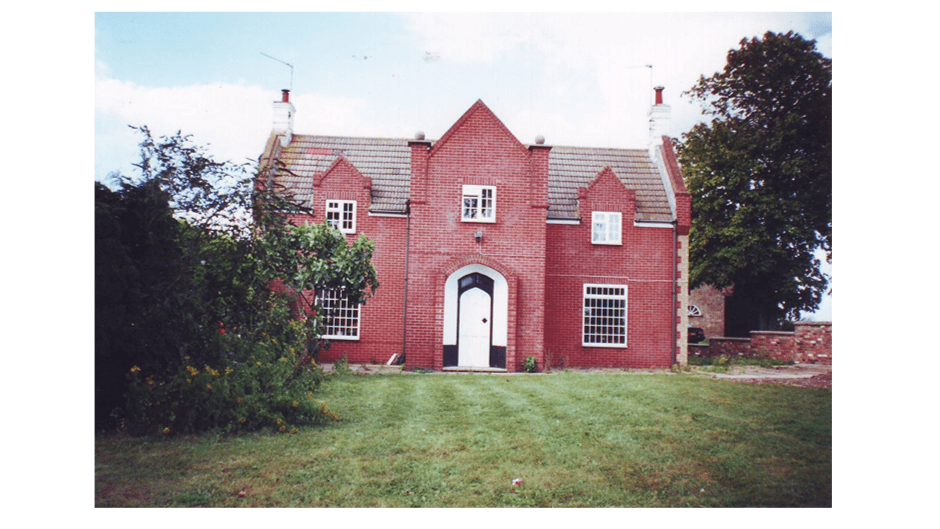
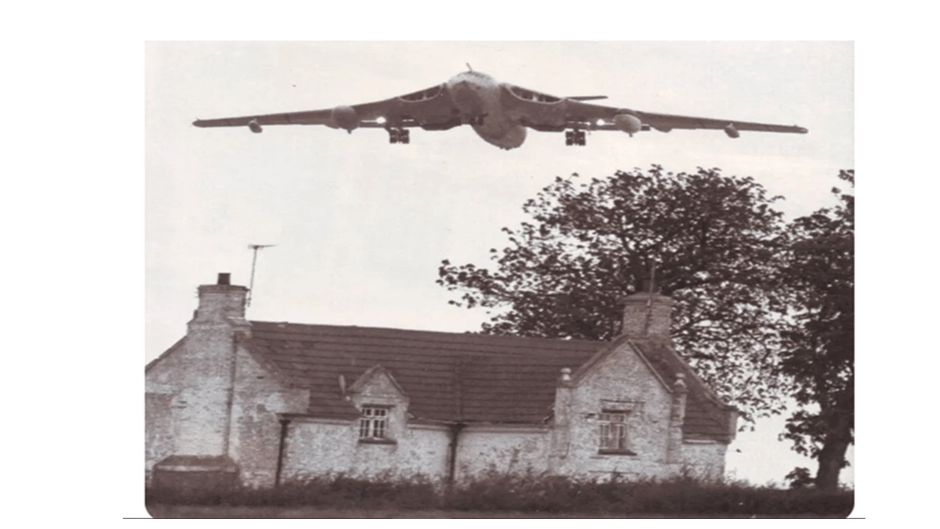
Broadlands Farm in the 1980s
 Fincham Local History Society