Moat House, Fincham
Moat House is named after the square moated island, possibly a medieval cattle enclosure, in a field called Moat Meadow near to the present building. There is no sign of a building on the site on the 1636 map, the 1772 Enclosure map or the 1839 Tithe map. In fact, Boughton Road (then known as Stoke Ferry Road and later Long Lane) ran mainly through fields. The Site was probably near one of the 13 manors of Fincham, Fairswell Manor. The present Fairswell Manor on the Swaffham Road is a large farmhouse shown on the 1839 tithe map and later maps.
These are extracts from the Enclosure Map of 1772 which show the square moat. Note the Lode Dyke flowing to the east of it.
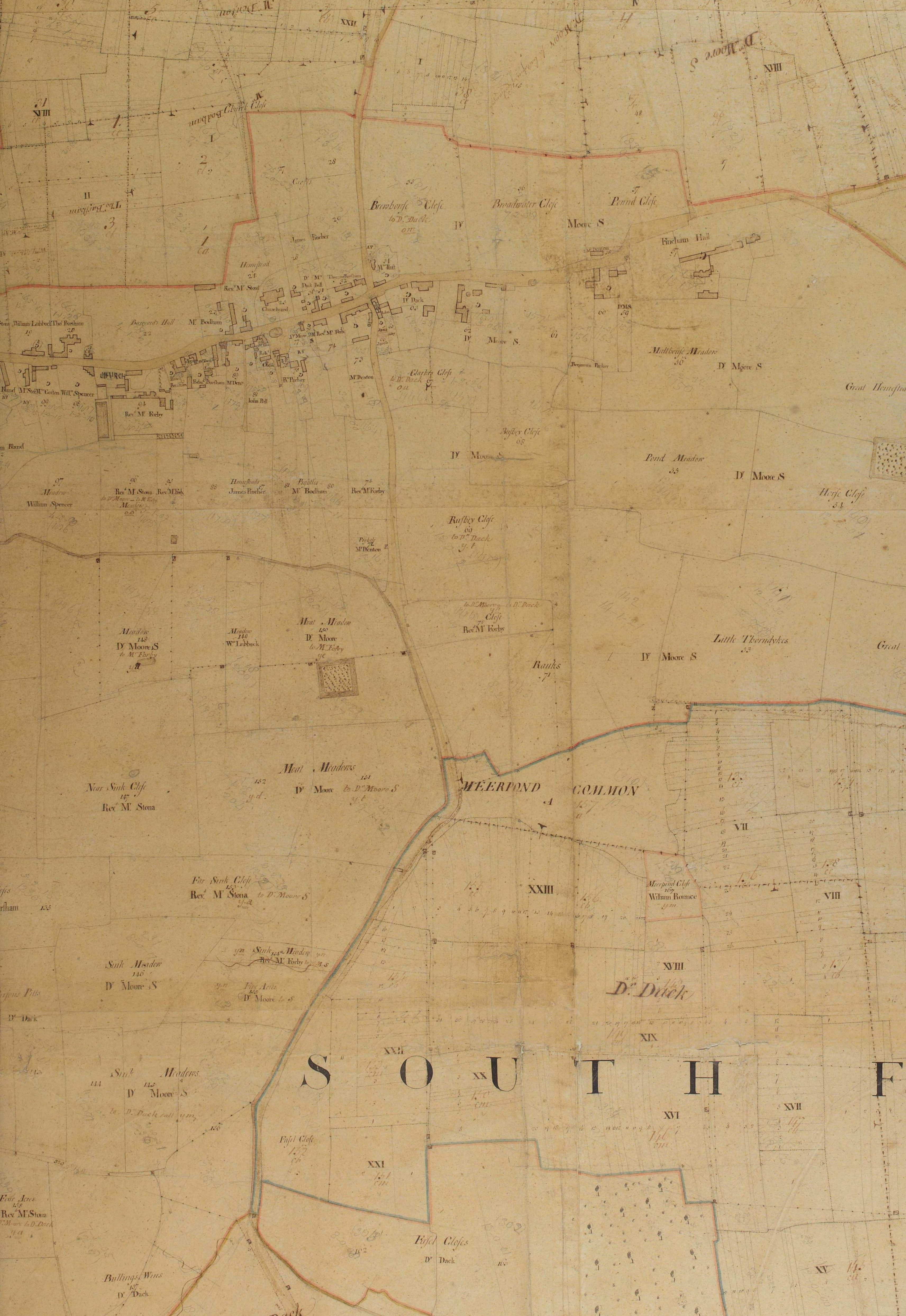
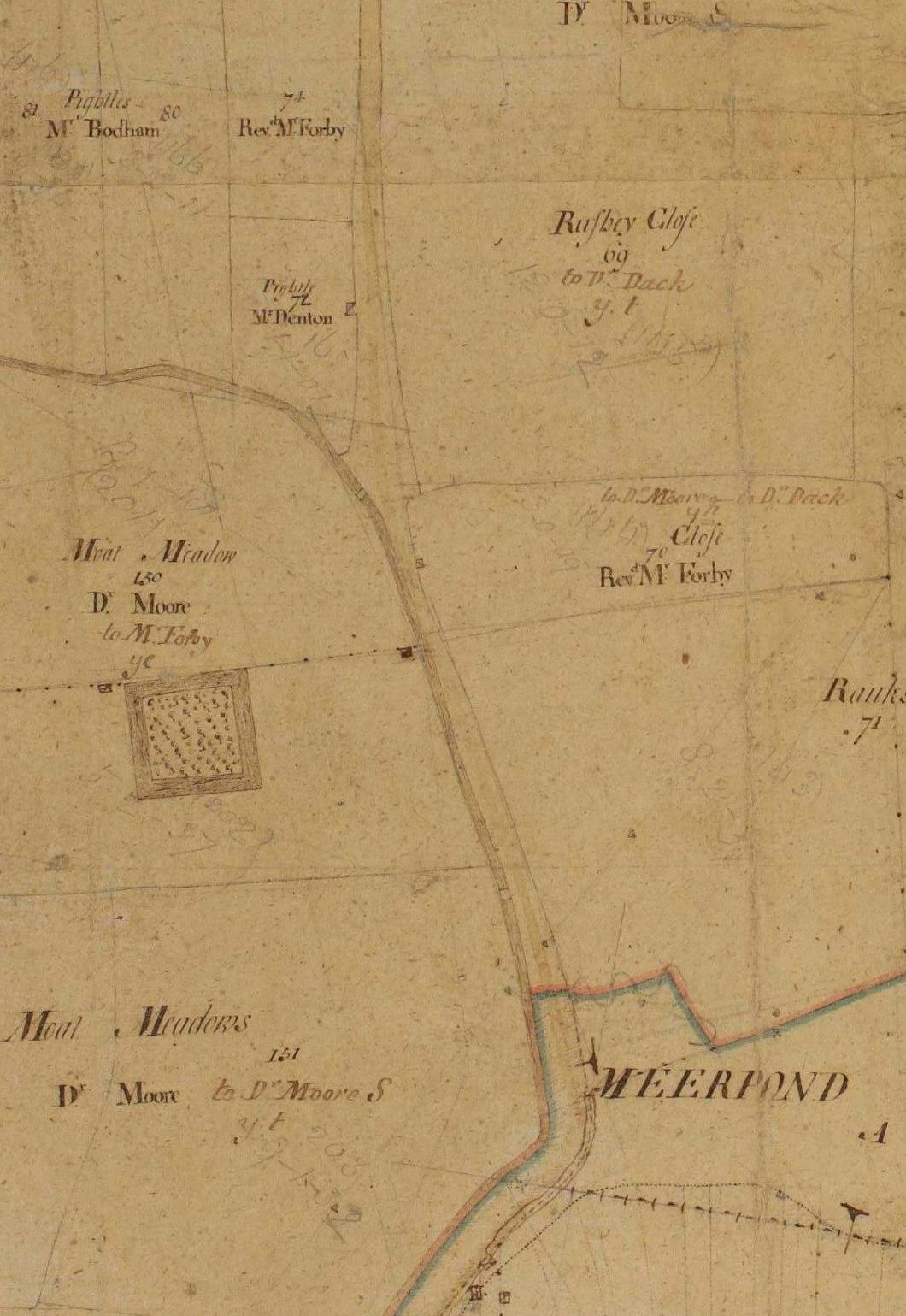
1839 Tithe Map. Still no Moat House.
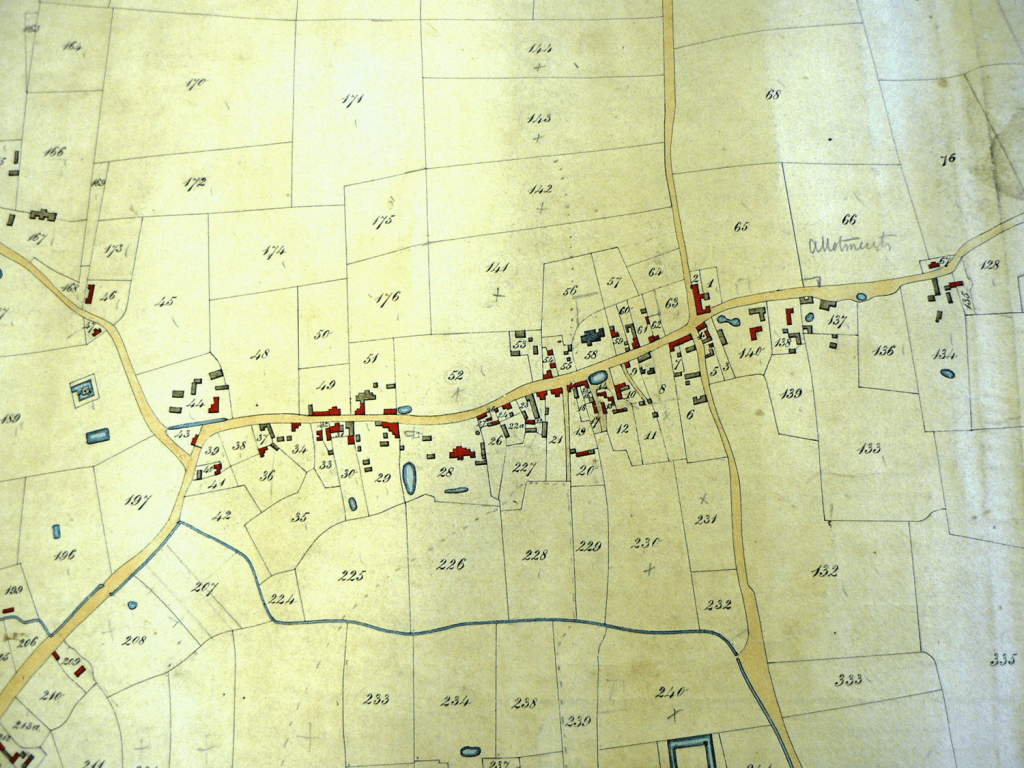
This is a map of 1885 which shows Moat House has been built.
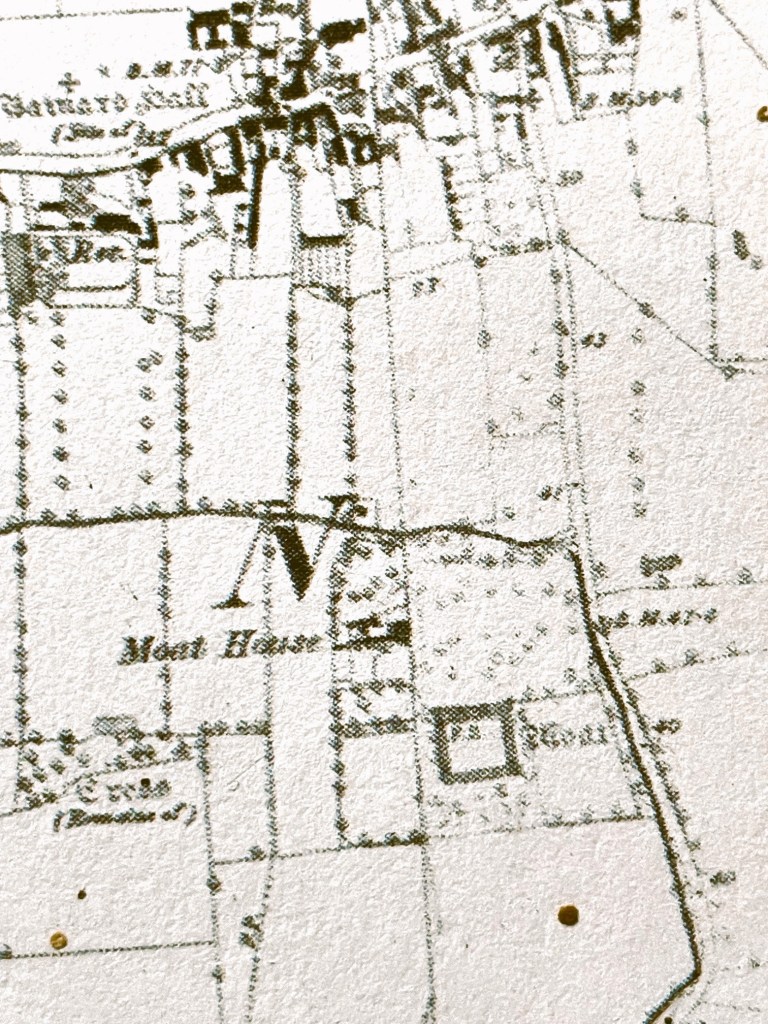
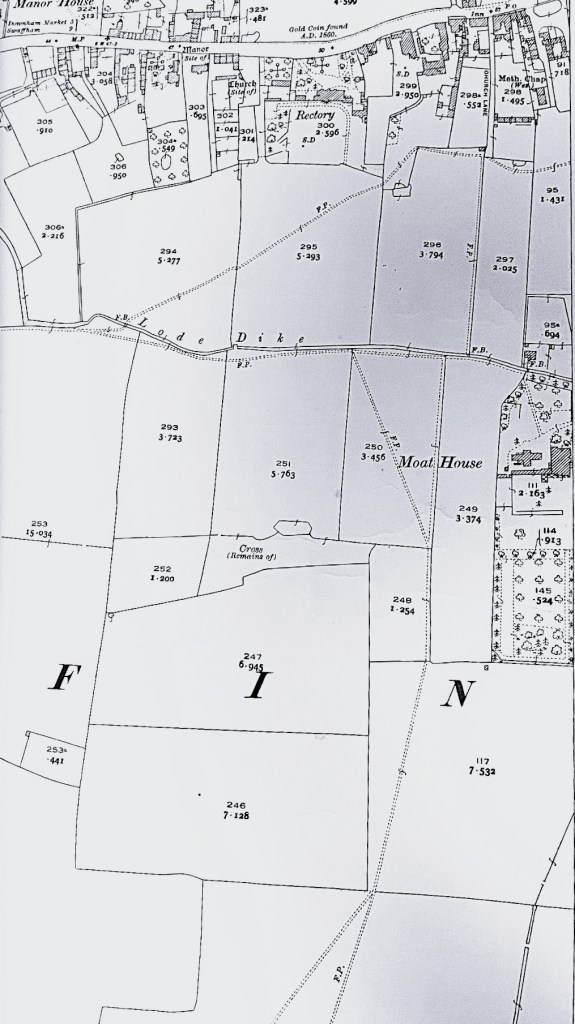
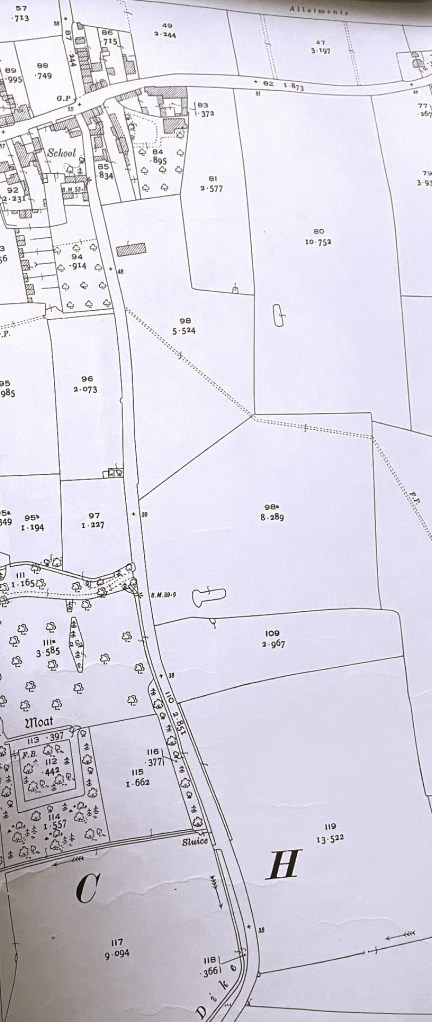
These extracts are from the 1928 O.S.map showing the Lode Dyke now diverted to the west and south of the grounds.
Moat House was built by George Aylmer
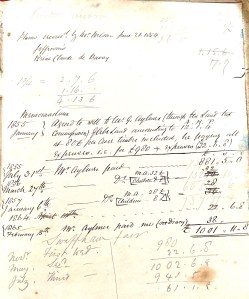
This is an extract from the Land Tax book kept by Rev Blyth. It shows the sale of Glebe Land to George Aylmer (1798-1867) in 1855. An area of 12 acres 1 rood and 4 perches was sold for £80 per acre, plus expenses. The total was £1001 11s 8d which was a considerable sum.
As an aside those two varieties of plum mentioned, Jefferson’s (from USA) and Reine Claude de Bavay (from Belgium) had only been introduced to England in the 1840’s. They are still cultivated.
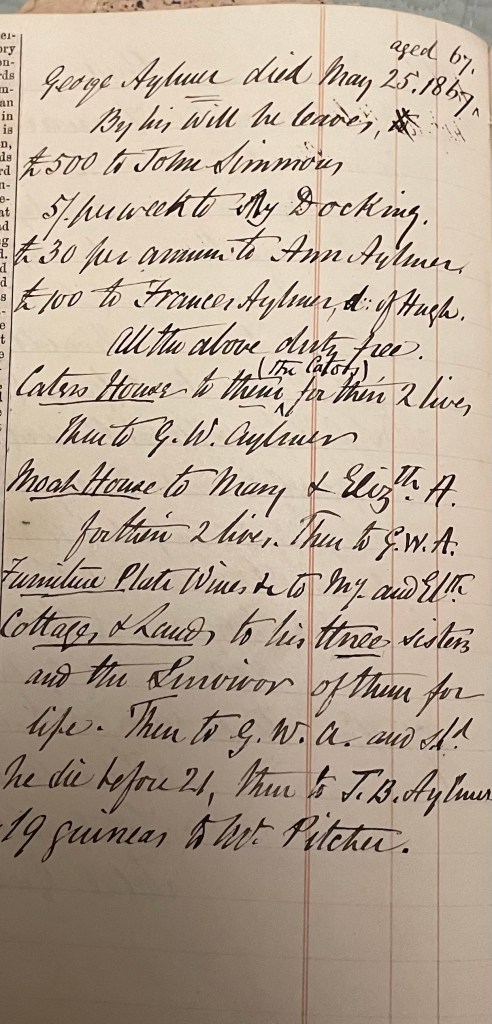
This is a record of George Aylmer’s will. It says:-
“Moat House to Mary and Elizabeth A. for their two lives. Then to GWA (GeorgeWinnearls Aylmer).” The Aylmers lived in Moat House for a short while and before the house was rented, presumably to Lt Bagge.
.
The Aylmers were a well off farming dynasty and different family members lived in many of the larger houses in Fincham.
Two views of Moat House in Edwardian times
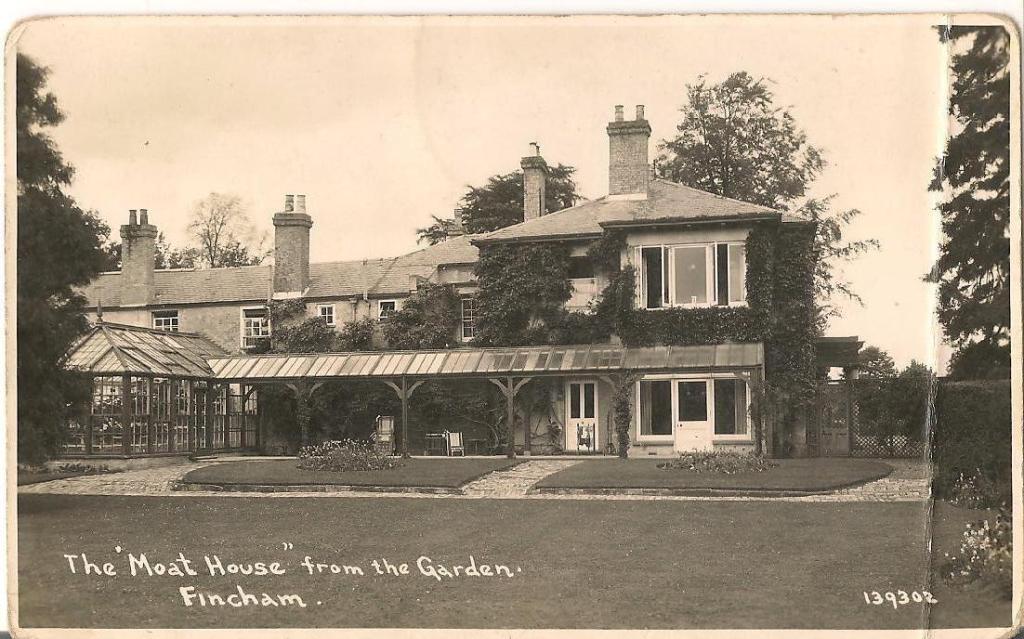
Flooded in 1912!
Is this the reason why an additional section of the Lode dyke was dug on the west side of the Moat property?

Later twentieth century views
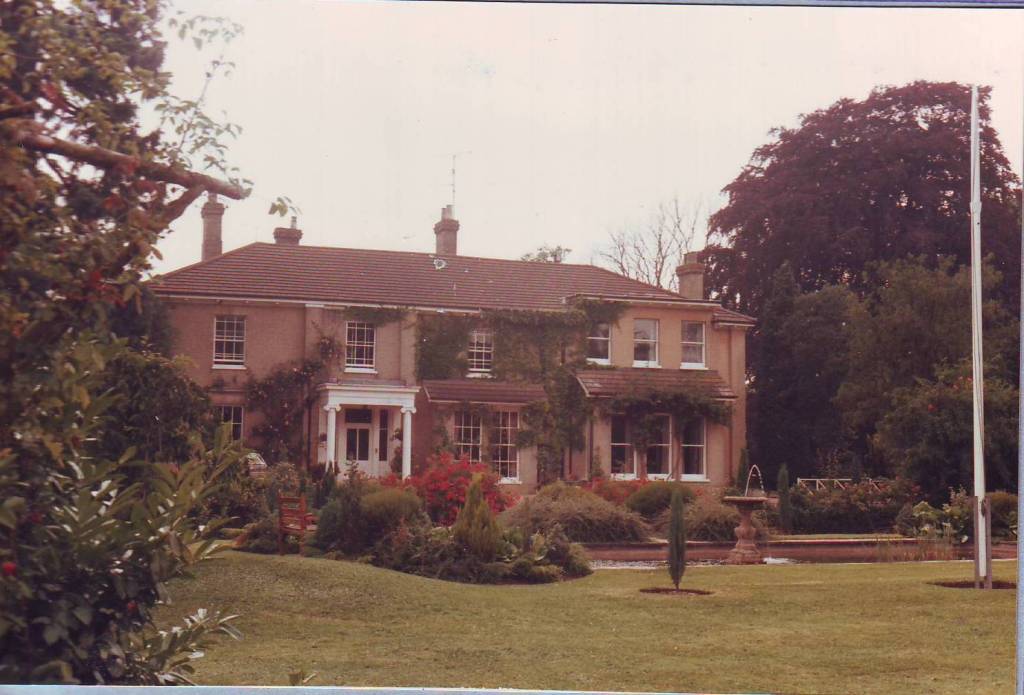
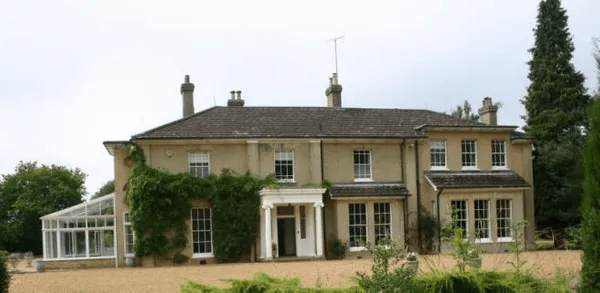
The house later Brooke farm was the gardener’s cottage for Moat House. In the early days there were only two bedrooms but it was later extended.
SOME OCCUPANTS OF MOAT HOUSE
1864 In the 1864 and 1865 Trade directories George Aylmer landowner and farmer is living at Moat Hall /Moat House.
1868 In the 1868 Harrods directory the Misses Elizabeth and Mary Aylmer are shown as living at Moat Hall
1881 The 1881 census records that Commander Alfred Bagge RN lived there with his wife Millicent and sons Alfred , John and Henry. On Dec 4th 1880 the Thetford and Watton Times reported -“Mrs Bagge of Moat House, had an accident driving a pony phaeton.”
1888 The 1888 and 1890 Kelly’s Directory record Frederick Taylor/ Tabor Ackland as living at The Moat.
1896 The 1896 Kelly’s Directory says Edward Fishbourn lived at the Moat.
1904 Admiral of the Fleet Sir Gerard Henry Unctred Noel and his wife, Charlotte Rachael (Cresswell) lived in the house from at least 1904. He died there in 1918. For more information on the Admiral see under People
One of Admiral Noel’s daughters was named Ida after her paternal grandmother. Both she and her sister Charlotte, (a watercolourist ) converted to Catholicism. Ida became a nun at the Sacred Heart Convent, Roehampton, London. Sir Gerard was a stalwart of St. Martin’s Church in Fincham so one can imagine some conflict in the details of his daughters’ adherence to the Catholic church.
In an account of the history of the Catholic church in Downham Market it says “Details concerning the founding of the mission at Downham Market are scarce. The Parish Priest of Swaffham, Father Vendé records in the Swaffham Parish Mission Book that Mass was celebrated at Fincham in 1914. He writes:
“In December of that same year (1914) Miss Noel expressed the desire of opening an Oratory in her house, called “The Moat”. With the permission of Admiral and Lady Noel, a small place, formerly the painting studio of Miss Noel, was chosen as a temporary chapel.
“I consented every Sunday with the Bishop’s approval to say Mass in Fincham, and I did so until the time of the opening of the Downham Market Mission. The number of Catholics in Fincham was two at the time, but a good few refugees were stationed in Downham and the neighbourhood.”
An entry in the Swaffham Parish Mission Book for 1915 reads: “
The principal event recorded for this year was the opening of the Church at Downham Market. By permission of the Bishop, and the generosity of Miss Noel, the principal benefactress, together with Mrs Wayman, a local resident, and recent convert, a stable was provided to be used as a Chapel. On 19th March (1915) I said the FIRST MASS SINCE THE REFORMATION IN DOWNHAM MARKET, in the presence of a few stray Catholics and in the evening I gave Benediction, at which many non-Catholics assisted. Mrs Winter, and the nuns of Swaffham were present, with the pupils, to form a choir. Later it is recorded: “Ever since then I have said Mass there almost every Sunday, except since the beginning of the fourth year of the War, when Mass was said only once a month, on account of the heavy motor expenses. In September, I had the consolation of receiving into the Church the first convert, Mrs Heal, as a sequence to the Mission, and she made her First Communion the following Sunday.”
1925 Kelly’s directory lists Captain Percy Lockhart Hartman Noble as the inhabitant
1946 A Major Adcock was living in the house in 1946.
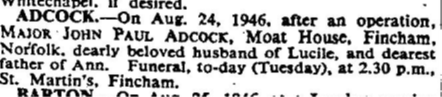
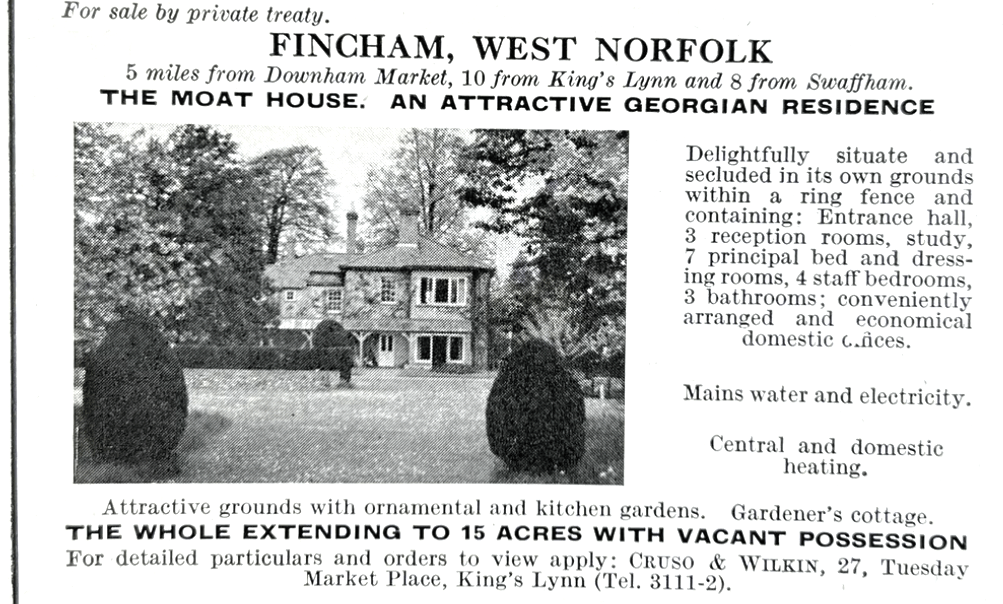
Moat House for sale in 1951. The house is not actually Georgian but it is attractive.
1960 In 1960 Lieutenant-Colonel and Mrs R.C,Kidd lived at Moat House when their daughter Audrey Mary was married.
Moat House has had several more owners since. It remains a fine house in lovely grounds.
 Fincham Local History Society