War Memorial
The vast numbers dying in the first world war meant that early on in the war it was realised that repatriation of all the dead was just not possible, therefore, as Kate Tiller says in her book on War Memorials-
“A monument was one permanent way of expressing loss and perpetuating the memory of the victims.”
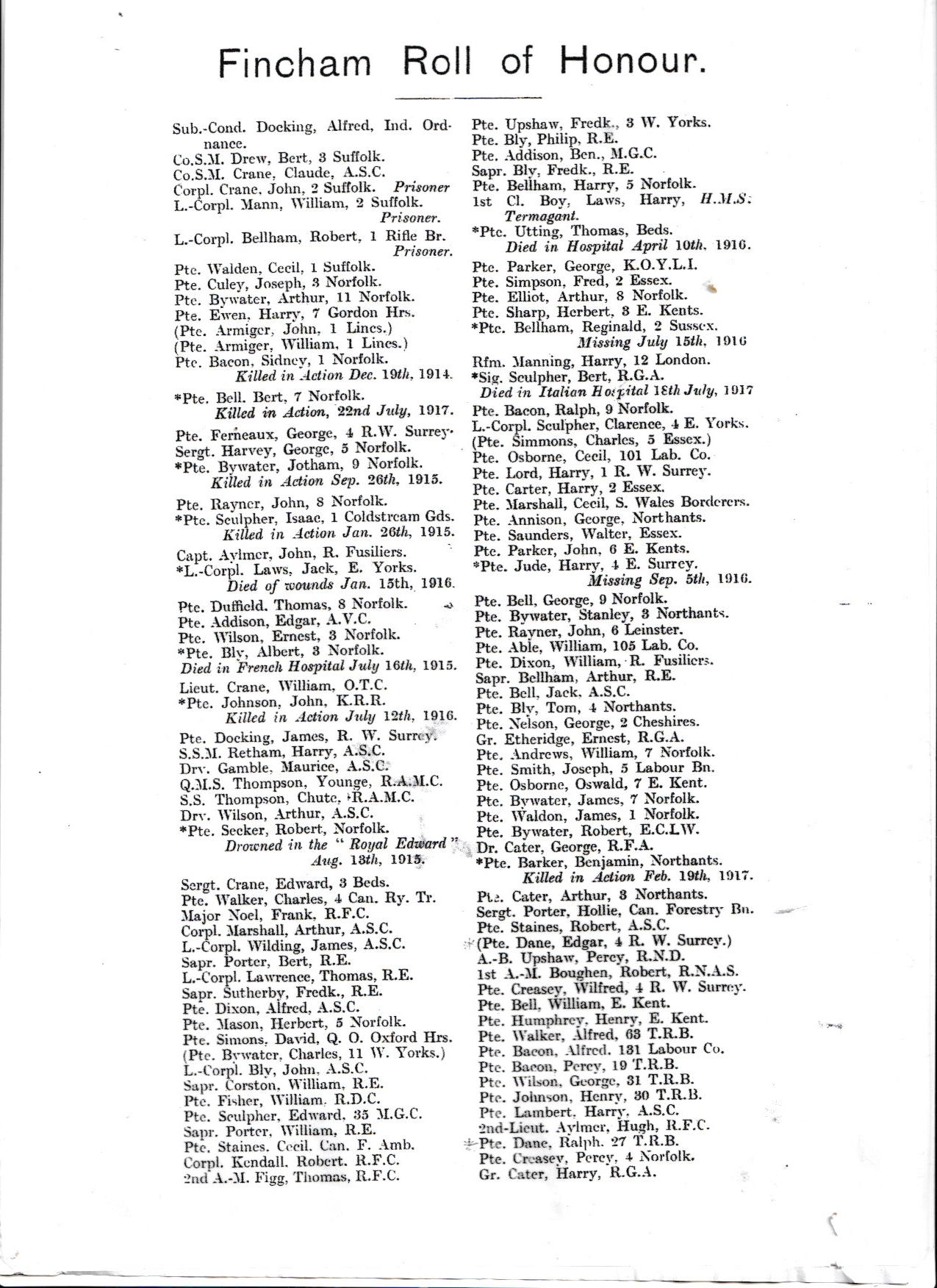
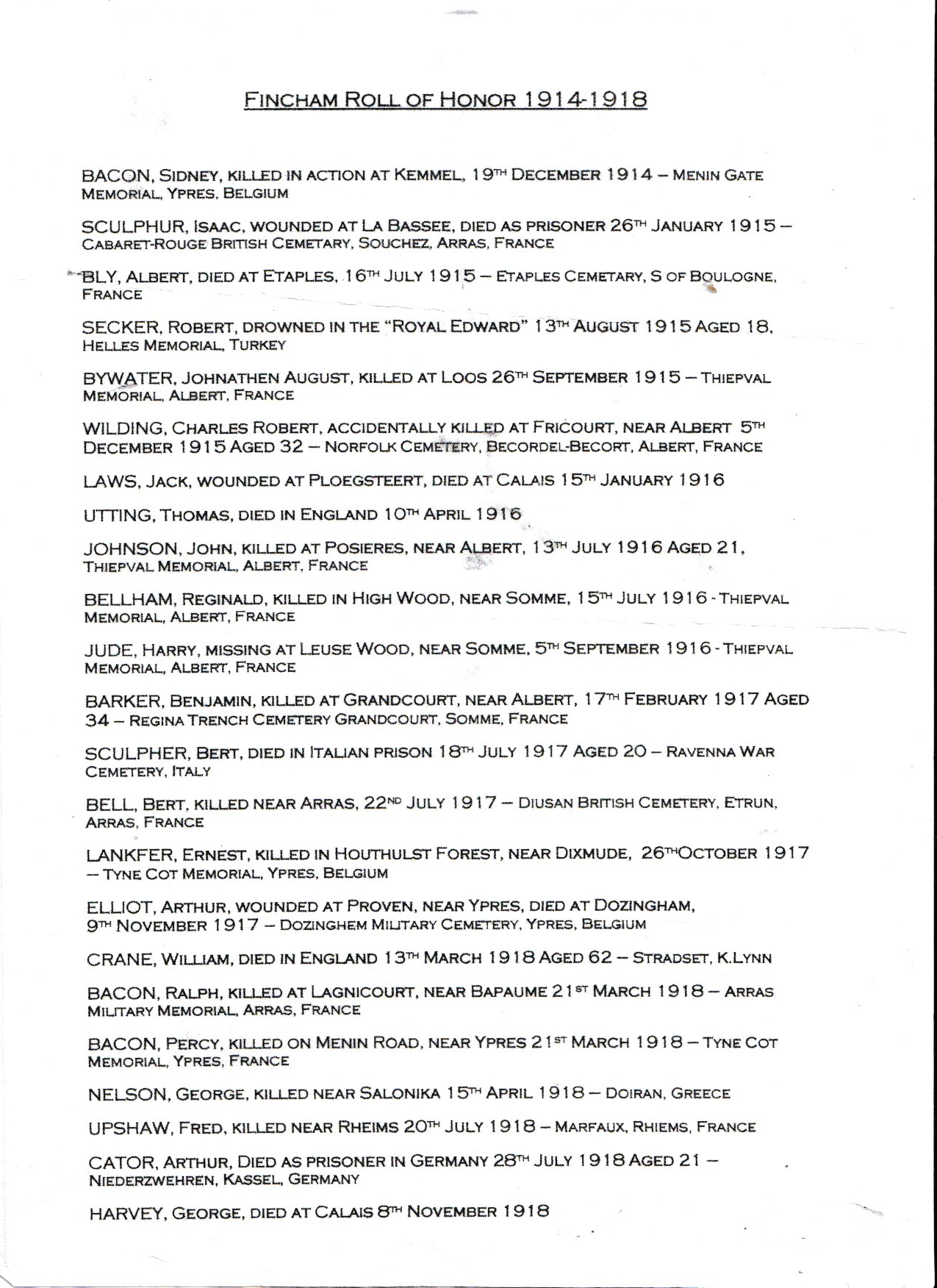
Recent estimates of the number of families directly affected by the loss was about 10% of the population. This feeling of loss would, of course, spread to relations and friends in other villages and towns. From 1916 onwards Rolls of Honour listed those who went to war and after the end of the war many villages and towns erected war memorials listing those who had died in the 1914-1918 war.
Names on the memorials were not always those who had lived in a town or village. For instance, a man born in a village might be included if his parents still lived in the village or if a widow went back to her home village, she might request that her husband’s name be listed.
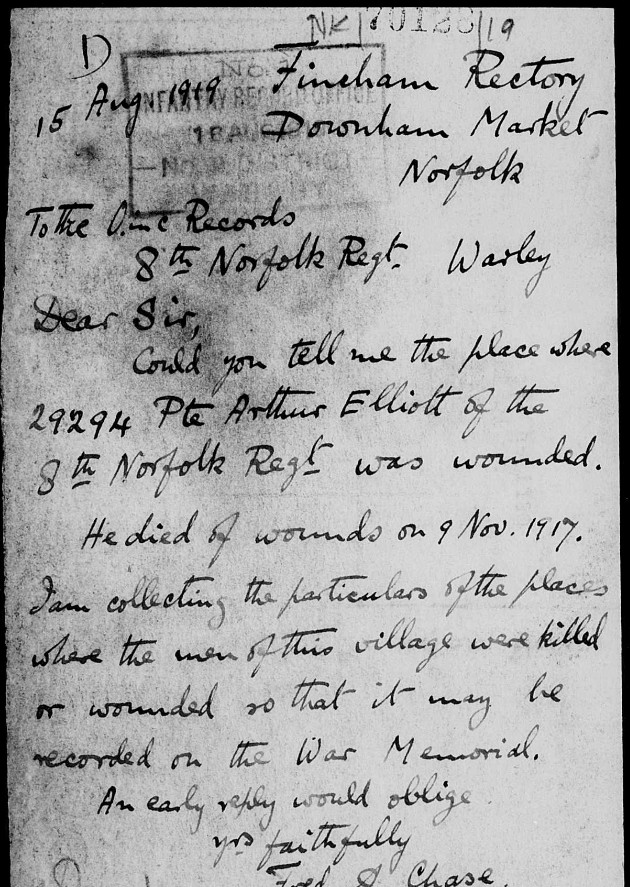
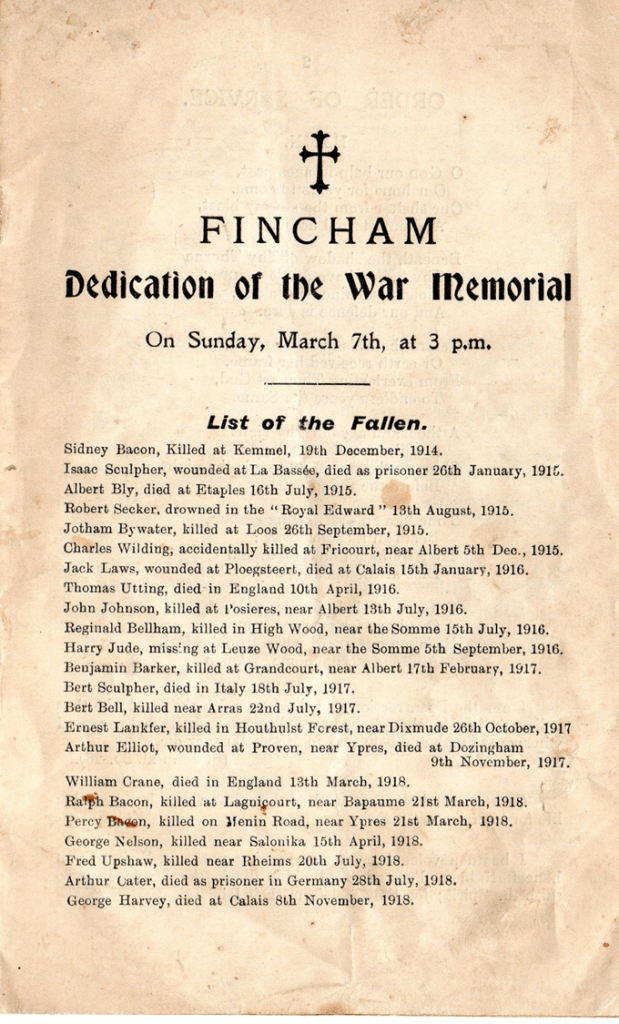
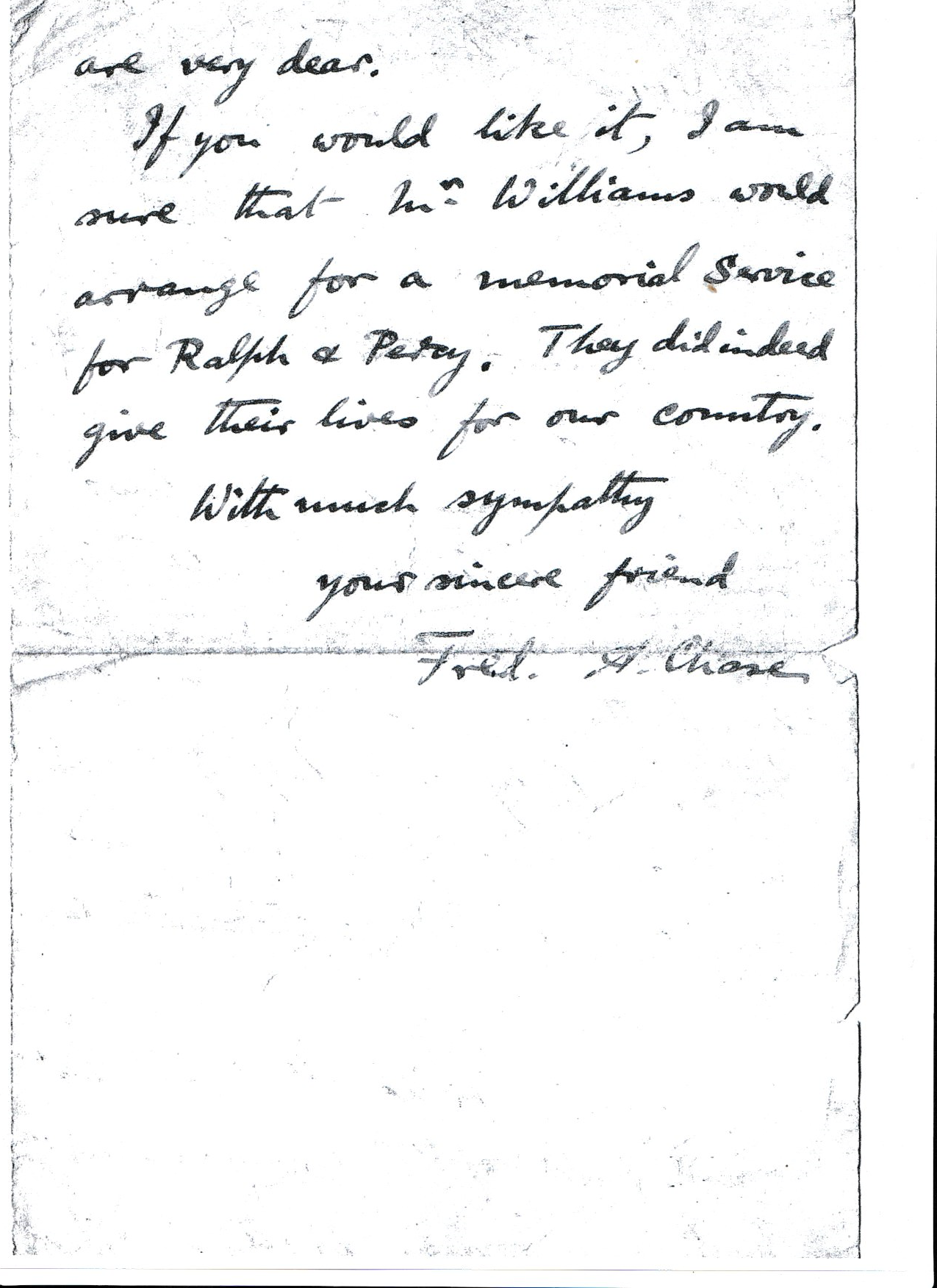
The initiative in Fincham seems to have come from the Rev Chase, the Anglican rector ,as this letter to the Royal Norfolk Regiment at Warley shows.
****************************************************************************************
Fincham War Memorial
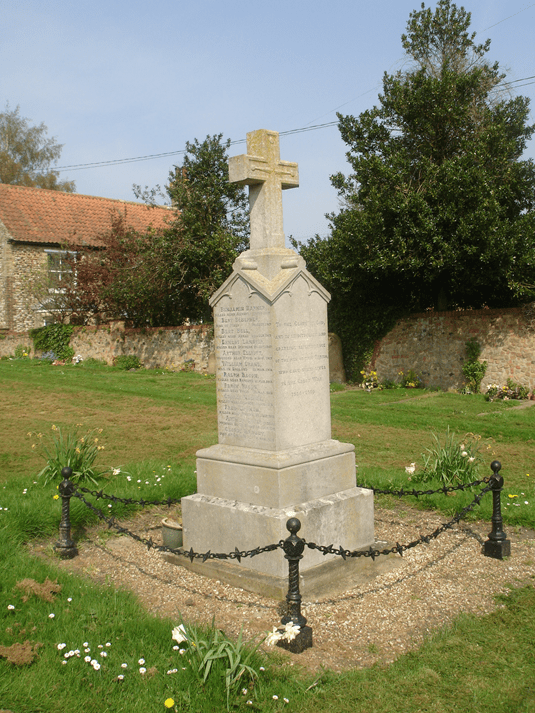
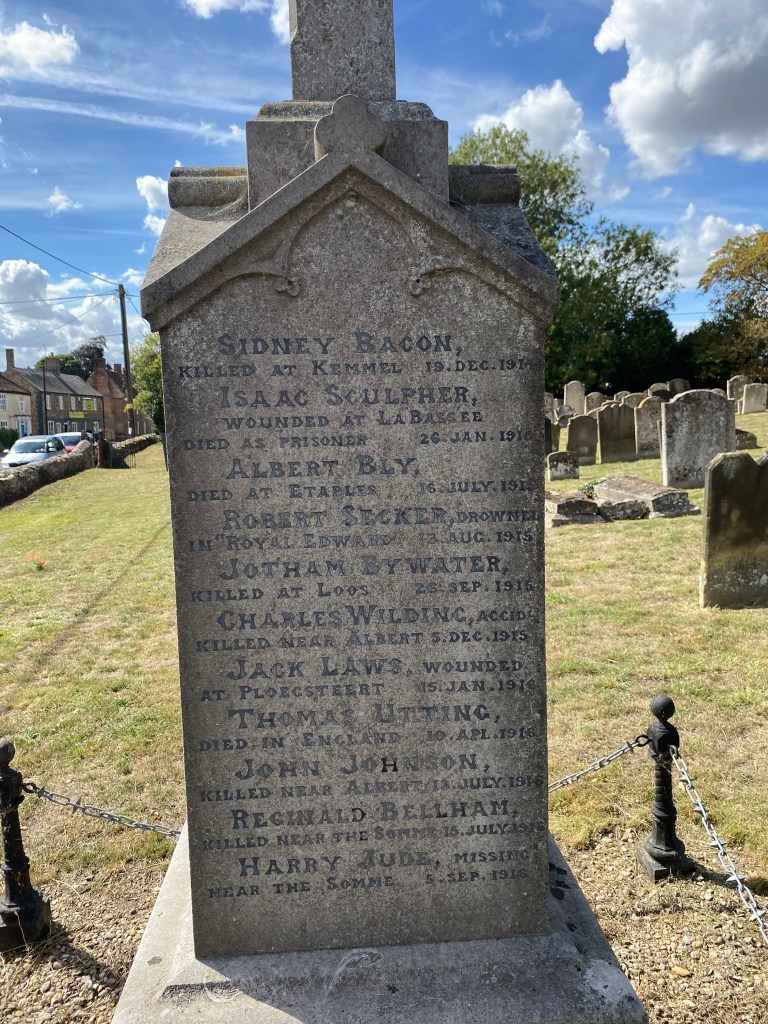
This memorial is of very high quality. The letters are inlaid with lead and there has been little deterioration in a hundred years. A fitting tribute to those whom it remembers. The detail of what happened to the men in the First World War may be the result of Rev Chase’s efforts as mentioned above.
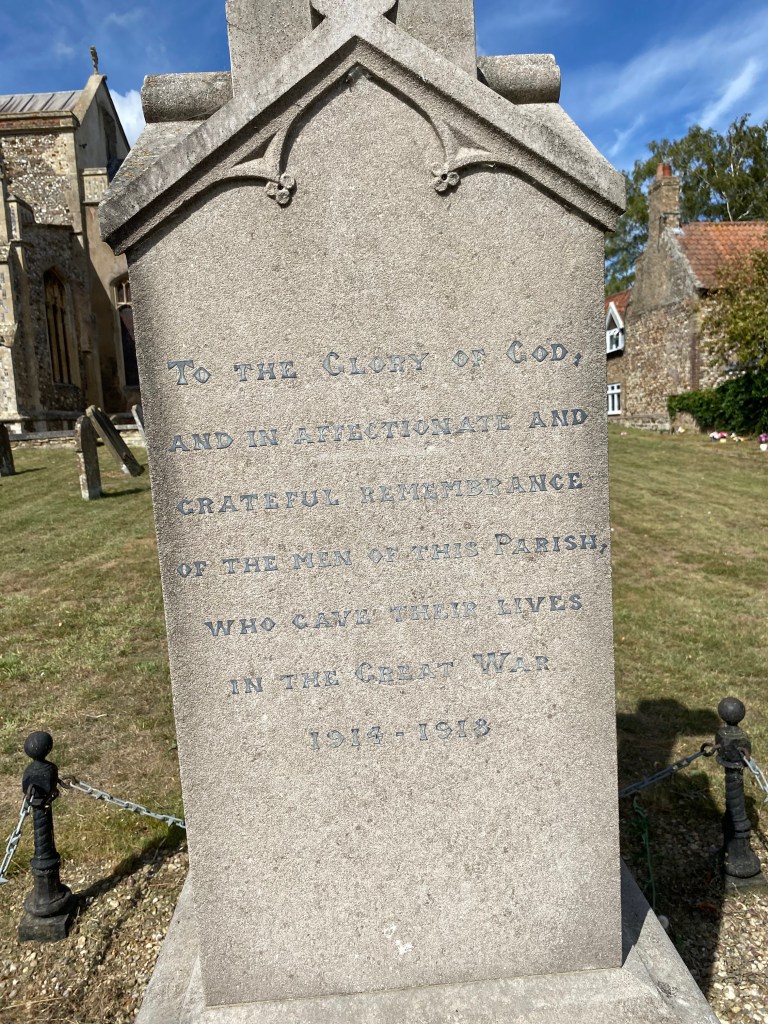

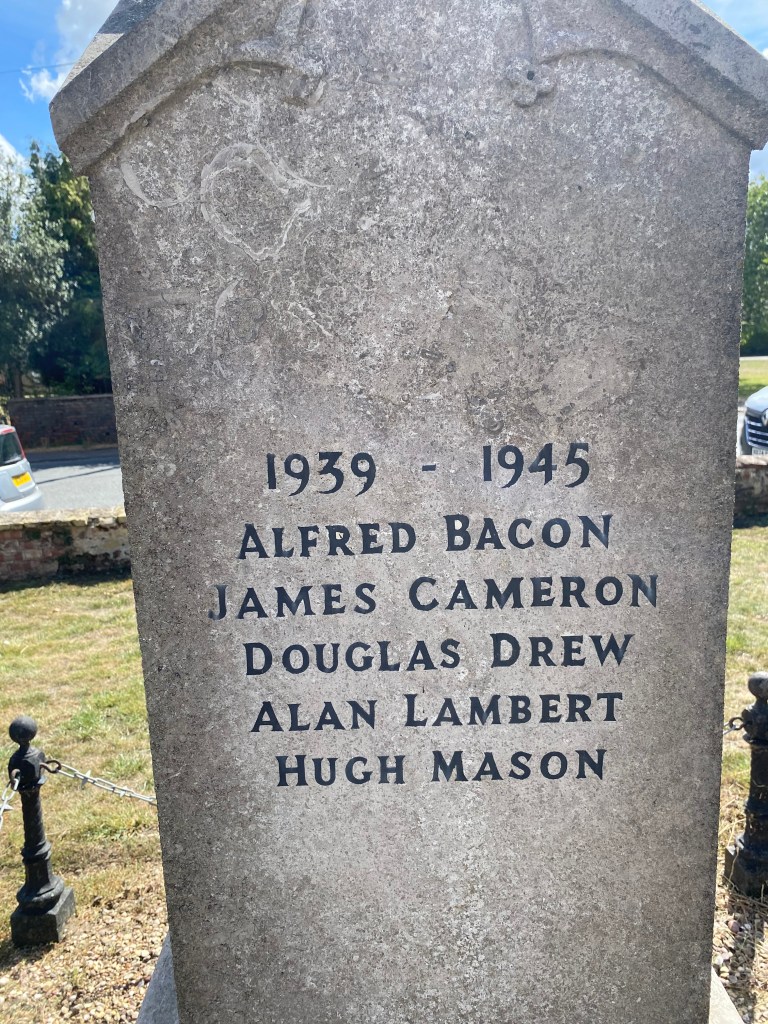
The Second World War
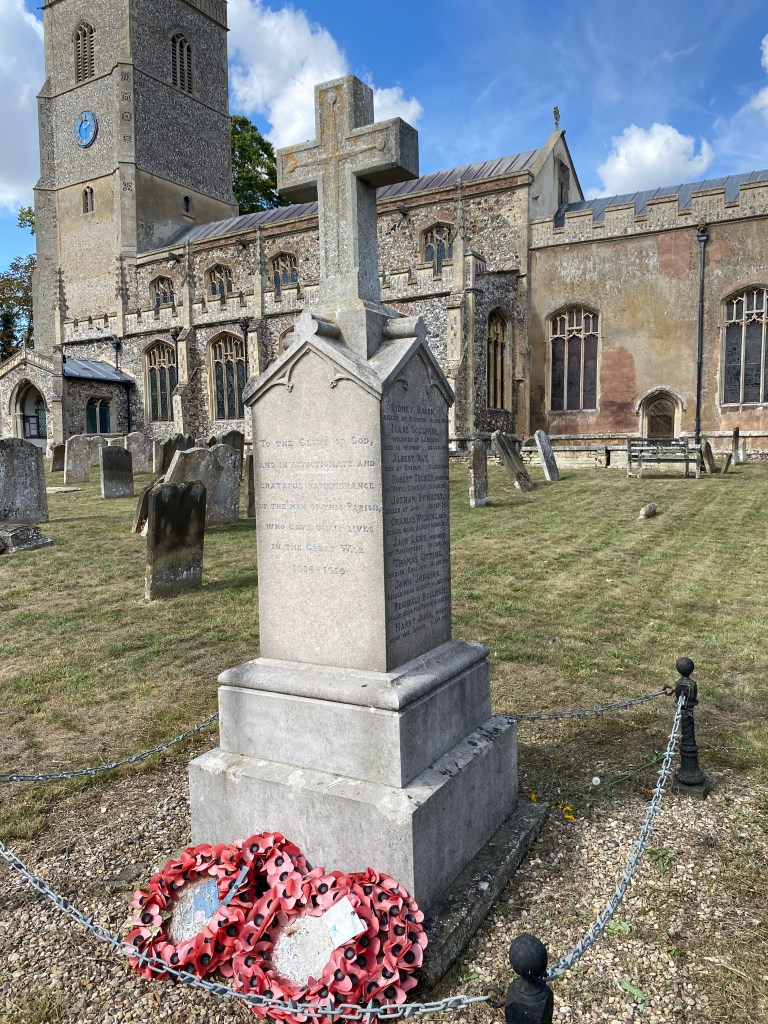
Forever remembered
*****************************************************************************
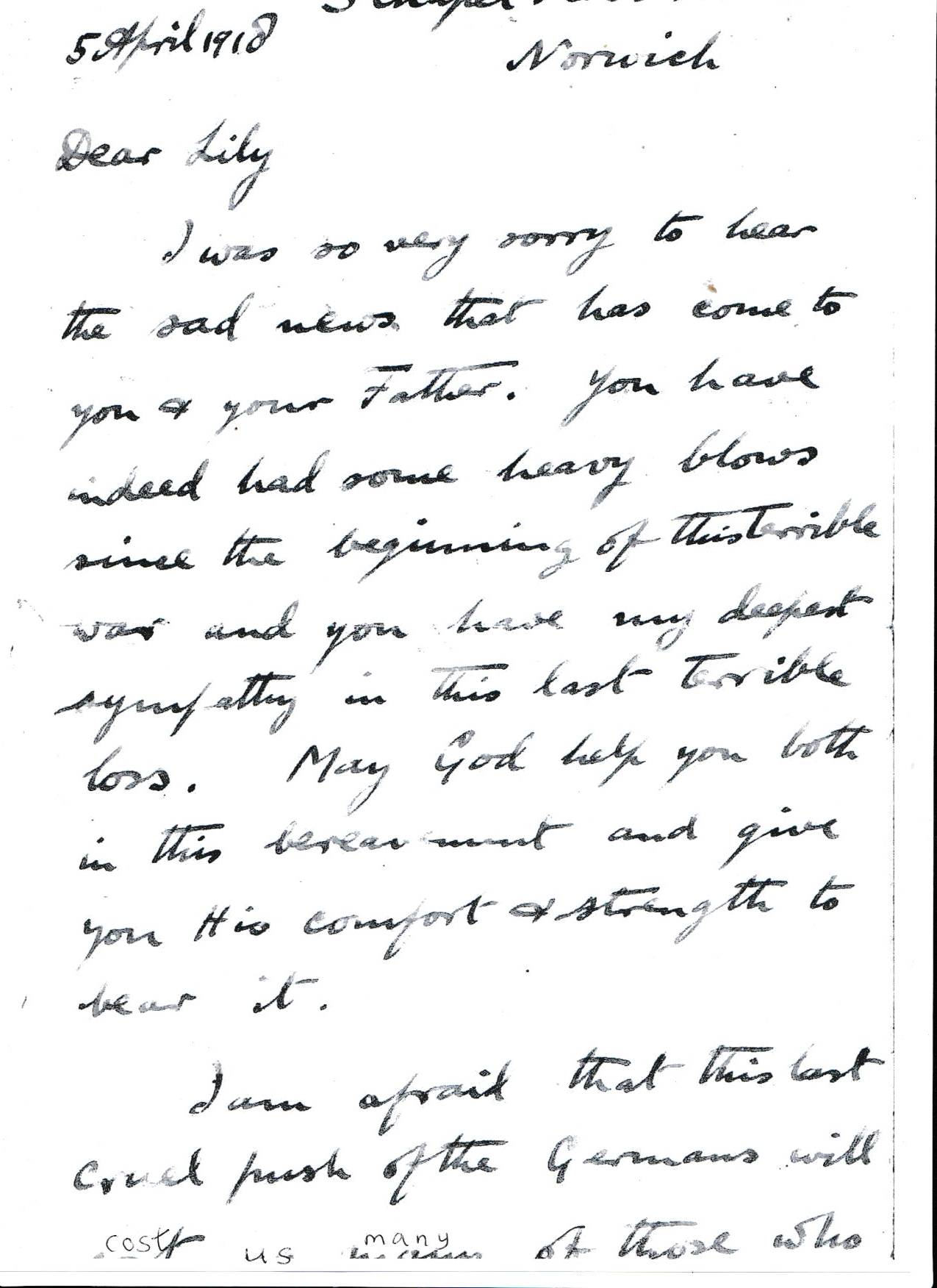
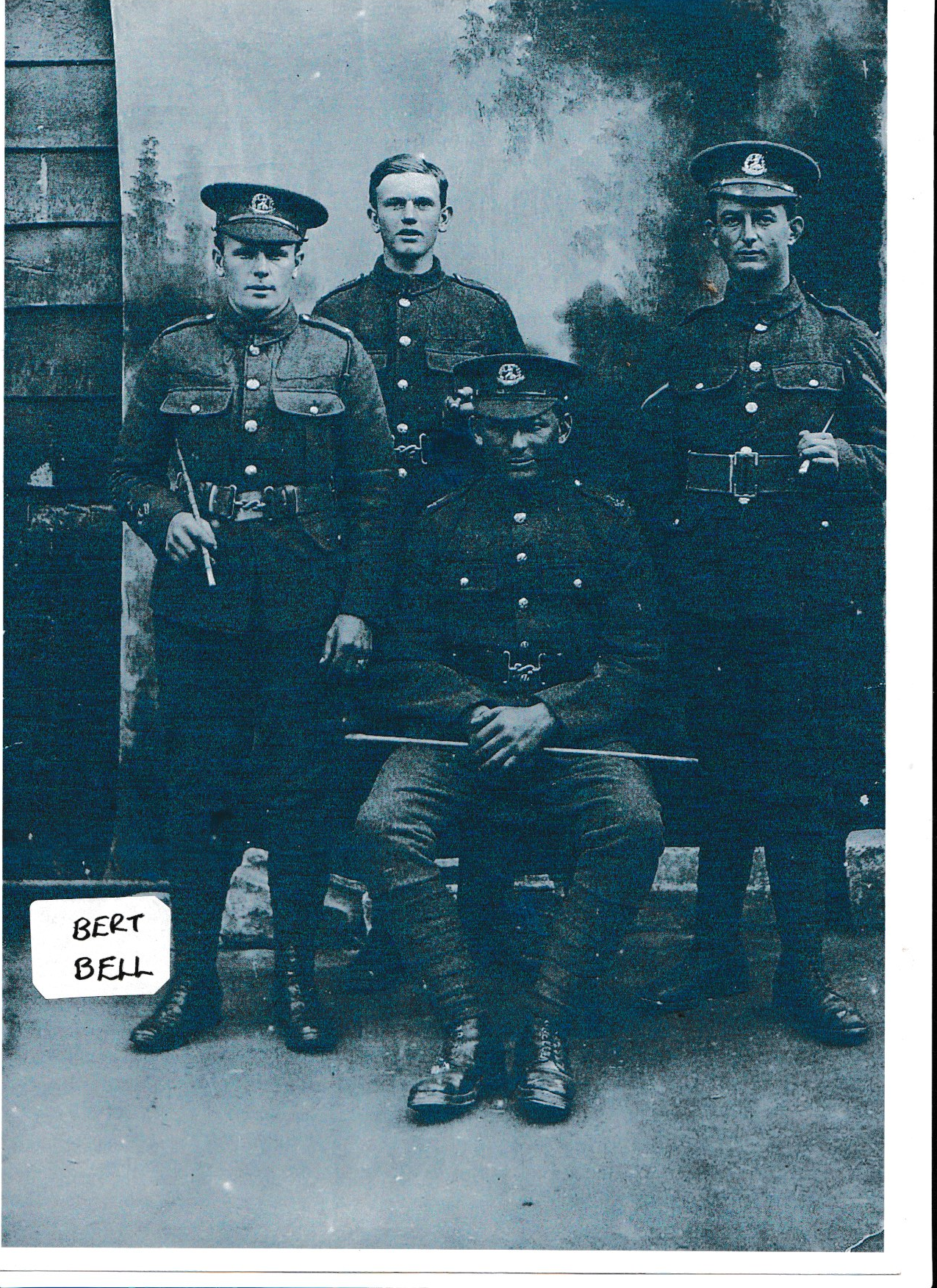
The suffering of the Bacon and Bell families.
*****************************************************************************
**************************************************************************************
****************************************************************************************
****************************************************************************************
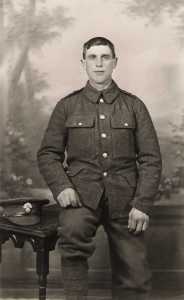
First husband of Ivy Annison. He died in France on 21/3/1918 on the opening day of Operation Michael, the last great German offensive of the war, aged 26 (although official military records show age 25). Private 40288 in 9th Battalion, Norfolk Regiment. Name on Bay 3 of Arras Memorial, Arras, France. (Cap badge is not the Norfolk Regiment).
****************************************************************************************
Notes on some of the fallen by Adrian Maasz
****************************************************************************************
Charles Robert Wilding
Died from accidental injuries
Charles Wilding appears with many others on the Fincham War memorial followed by “Died from accidental Injuries” Whilst many casualties were sustained from accidental injuries, there was very little to protect individuals, and many died in training from accidental discharges, explosions etc. It was perhaps less common to see accidental deaths on the front line.
Charles Robert Wilding was born on November 6th 1883 at Barnham Suffolk to parents Robert and Martha Ann Wilding He was baptised on Dec 9th 1883
Charles first appeared in the 1891 census:- Robert Wilding, Head of household, Occupation Agricultural Labourer, age 39 Martha Ann Wilding Wife & Mother age 31, John age 9, Charles Age 7, James William age 3, Rose age 1
The 1901 census has Charles living in Gooderstone and working on a farm In 1906 Charles joined the Norfolk Militia (Territorials) as Pte 5727 3rd Battalion By 1911 Charles has moved to Lincolnshire and is a Horseman on a farm On the outbreak of war Charles was recalled to the colours but placed on the reserve until Jan 1915 when he joined the 8th (Service) Battalion service number 3/10476. The Battalion were sent to France on 25th July 1915 to replace losses sustained in heavy fighting around the area of Loos. Charles was based with the Battalion in the town of Albert which sustained heavy enemy attacks. To counter the attacks the British developed a mine which would be detonated under the enemy positions. To achieve this mine shafts and tunnels were dug underground to place large amounts of explosives and detonators. At some point Charles was transferred to 173 Tunnelling Company Royal Engineers .On 5th December 1915 Charles Robert Wilding fell 60 feet down a mineshaft and died instantly. His death was recorded in the Lynn News on 8th January 1916.
Charles was buried at Becordel-Becourt, Department de la Somme, Picardie, He has a cross inscribed “Thy will be done”. He is also on the Cockley Cley War Memorial. [AM]
************************************************************************************************************
Isaac Sculpher
1st Battalion Coldstream Guards POW & DOW 26/07/1915
Isaac Sculpher was born on the 12th April 1883 at Southgate near Beachamwell Norfolk, to parents John Sculpher and Eliza Sculpher (nee Mobbs). He was baptised on the 13th May 1883 at the Fincham Parish Church by the then curate Rev A R Gwyn. The 1891 Census showed Isaac living on College Rd Southgate along with parents and younger siblings Edward (age 6) and William (aged 6 months) John, Isaac s father is shown as a Farmyard hand. The 1901 Census revealed Isaac now 17 has been joined by Edward (16) Clarence (8) and Bertie (4)
On the 10th of October 1905 Isaac joined “the colours” and enlisted with the 1st Battalion Coldstream Guarded with the service number 6378. He was to serve 3 years as a regular soldier and 9 years as a reservist. It is likely that he was 5ft 8 inches or above to enlist in the guards, looking at others who enlisted at the same time they were all above average height.
On the 19th August 1908 Isaac married Rosetta Philpott in Hanover Square London, coming to the end of his time in the Regular Army. She came from Southampton and Rosetta gave birth to their first child, Violet Rosetta, on 5th March 1909. The 1911 Census showed Isaac and family living in Wimbledon. Isaac’s occupation was now listed as a baker. On the 19th May 1911 a second daughter Gwendoline was born and on the 24th July 1914 a son, Clarence Frederick, joined the family.
On the outbreak of War Isaac was recalled to the colours and rejoined the 1st Battalion Coldstream Guards where he underwent refresher training, probably in Windsor. On the 9th January 1915 Isaac was sent to France to join the 1st Battalion Coldstream Guards who had been withdrawn and were resting in Bethune. On the 19th January the Battalion received replacements of two Junior Officers and 118 other ranks. one of these Officer 2nd Lt H N Clifton has an online account of his service with the Battalion.
Isaac Sculpher would have been one of these men.
On the 20th January 1915 the Battalion returned to the trenches, The Battalion war diary recorded the terrible conditions facing the men with freezing conditions and flooded trenches making living conditions very difficult and a constant bombardment made their life very unpleasant. A number of men were taken ill, suffering with trench foot which necessitated evacuation to hospital The Battalion was tasked with protecting a rail bridge at Cuinchy near La Bassee Northern France
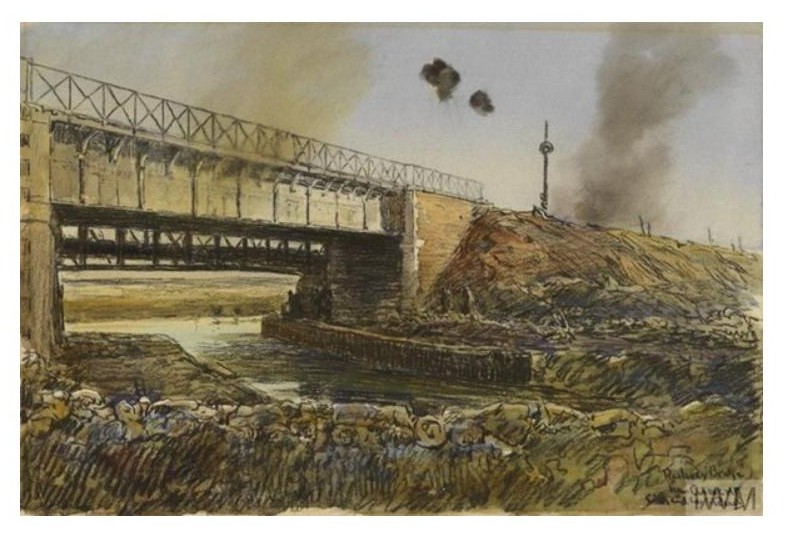
Image Courtesy of IWM. The Bridge at Cuinchy
At dawn on the 25th January 1915 the Germans started a heavy barrage. This was followed by a ground assault involving many hundreds of troops. There was heavy hand to hand fighting and the Coldstream Guards’ trenches were overrun.
During this action Pte 6378 Isaac Sculpher was seriously wounded and taken prisoner.
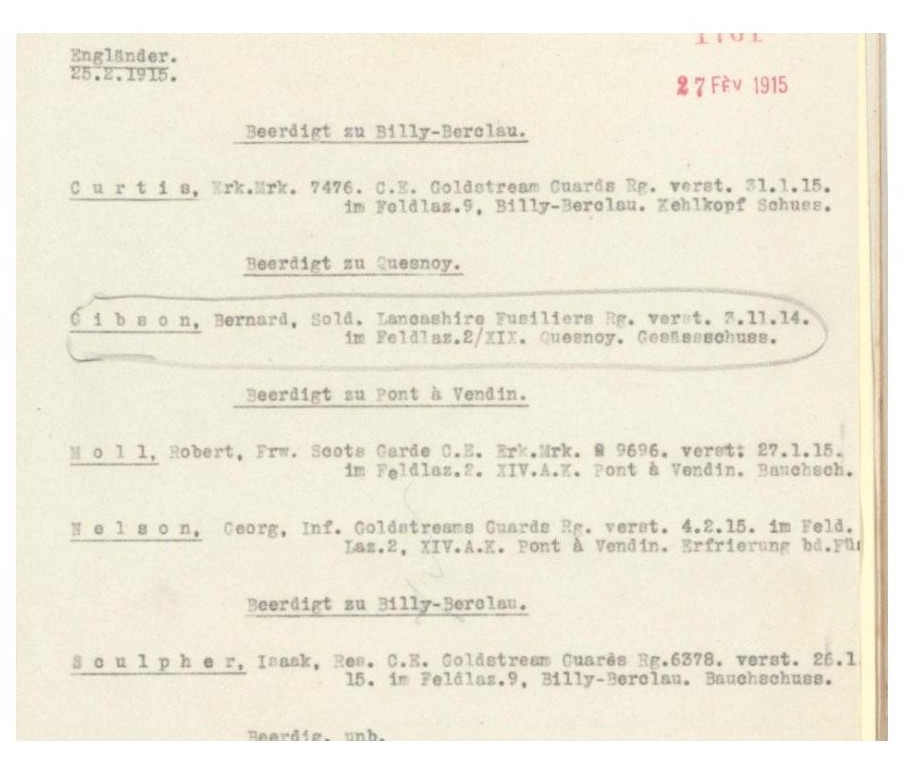
Image courtesy of Find My Past (FMP)
The above German document shows the bottom entry as Isaac,showing he was admitted to No9 “Feldlaz” German Field Hospital and died on the 26th Jan 1915. He was buried in the German Cemetery Billy Breclau. Isaac was one of 118 men who were missing in action on the 25th January. His Company Commander 2nd Lt H N Clifton was also seriously wounded and taken prisoner, dying on the 2nd February 1915. Isaac Sculpher had been in France for 15 days, 5 of those in the trenches
His wife received a pension of 20 shillings and six pence per week
Facts cross referenced and confirmed by Great War Forum members [AM]
************************************************************************************************************
Arthur Cater
Died of disease as a POW Niederzehren Manheim Germany
This has been a difficult research project due to name spelling of Cator vs Cater. Most documents relate to the latter. Arthur Cater was born in Fincham on the 13th August 1898 to parents Edward (born 1854) and Elizabeth Cater (nee Smith) born 1854. The 1901 Census shows the family living on the Common, Fincham. Edward Cater, head of household Age 47 Agricultural Labourer. Edith Cater Wife age 47, Edith Cater Daughter age 20, Dressmaker, William Cater Son age14 ,Agricultural labourer, Harry Cater age 10 scholar, George Cater age 7 scholar, Elizabeth Cater age 6, Arthur Cater age 3. Thomas Mantle Age 54 yrs Lodger. The 1911 Census, which was the first census compiled by the head of the household submitting the details him/herself. The details remain the same with the exception of Daughter Elizabeth who is missing and the lodger Thomas’ occupation is given as a shoe mender.
Arthur Cater joined up on 24th August 1916 (Conscripted) in Norwich and was posted to “B” Company 6th Battalion Northamptonshire Regiment. Following training Arthur moved to Folkstone and landed in Boulogne on 1st December 1916 and joined the 6th Battalion who were based in Arras having come out of the front line. They remained “in training” until the middle of January 1917 when they returned to the front line relieving the Royal Warwickshire Regiment in the area around Ypres. The Battalion war diary reports bad weather and frequent flooding to the trenches. On the 26th Feb 1917 Arthur was admitted to hospital with “trench feet” This was a serious condition where constant cold and wet skin impedes the blood flow to the extremities leading to tissue loss and an increased risk of gangrene and ultimately amputation. Arthur returned to his unit on the 3rd March 1917. However his return was short lived, On the 12th April during a German bombardment of the trenches Arthur was wounded by shrapnel and evacuated back to the UK, being admitted to a hospital in Wiltshire. He remained there,eventually being passed fit in November 1917. Once again, his return was short lived as Arthur developed Pneumonia and in a signal concerning casualties was listed as seriously ill. As part of his recovery he was furloughed home from 3rd to 12th Dec 1917.
His service record noted that on the 22nd December 1917 Arthur was late for a sick parade and was awarded two days ‘confined to Barracks’!
On his recovery Arthur returned to his Battalion and was involved in the spring offensive of 1918.
During a German counterattack the Battalion war diary reported the forward trenches being overrun and sustaining heavy casualties with many men missing. On the 23rd March 1918 near Montaneau Arthur Cater was taken prisoner along with many others from the Battalion and the Royal Fusiliers whose front line was overrun.
He was taken to Germany and kept in a Prisoner of War (POW) Camp at Niederzehren near Kassel in Germany. This was one of the largest POW camps. His parents were notified of him being a POW on the 6th June 1918 following a request made by his mother Edith to the International Committee of the Red Cross.
Their relief turned to despair as Arthur fell ill and was admitted to the German Hospital suffering from Cardiac weakness (Failure). This is likely to have been brought on following the serious case of pneumonia, which would have made it more difficult for the lungs to pass oxygen to the blood cells leading to pulmonary high blood pressure. Arthur Cater died in the Hospital on 28th July 1918. He was 21 yrs old and was buried in the Cemetery attached to the POW camp.
References : Ancestry: Find My Past: Great War Forum [AM]
************************************************************************************************************
Arthur Thomas Utting
Pte 27326 4th Battalion Bedfordshire Regiment
Arthur Thomas Utting was born in 1894 to an unknown father and Mrs Serena Beart who was living at Stow Bridge Norfolk
He first appeared in the 1901 census with an address given as Sluice Rd Denver Norfolk. James Beart was Head of Household Age 20 in 1901 and ‘Herdsman on a farm’, Serena Beart Wife 24. Arthur Utting, Stepson,6, Florence Utting, Stepdaughter, 3, John Beart, son. 1 Mary Beart daughter -under 1 month.
The 1911 Census recorded Arthur as being a lodger on Field Barn, Fincham, aged 17 and a Horseman as his occupation
His attestation papers did not survive, along with thousands of others which were destroyed in the Blitz of 1940. From what little evidence there is it suggests that Arthur joined up in early 1916, possibly conscripted, and was posted to the 4th (Service ) Battalion.
A service Battalion was a support Battalion used to train soldiers before passing them on to more operationally ready Units. The 4th did not enter France until July 1916.
Prior to partaking in active service the Battalion was based in Harwich Essex and tasked with defence of the port.
There is no medal index card listed for Arthur Utting with the same service number, therefore it is reasonable to assume that he did not enter an operational theatre and so was not entitled to any medals.
Again it is supposition but a reasonable conclusion would be that Arthur contracted one of the serious illnesses such as Influenza or measles which were prevalent at the time and very often fatal.
Arthur’s death was recorded by the Commonwealth War Graves Commission, acknowledging his death was connected with War Service, His name is commemorated in the Ladywell Cemetery Lewisham S E London [AM]
************************************************************************************************************
William Henry Crane
1st Battalion Suffolk Rgt & No 6 Officer Training Corps
William Henry Crane was born in April 1867 to an unknown father and Ann Mary Crane (nee Evans) in Swaffham Rd Fincham. He was baptised on the 14th July 1867 at the parish church in Fincham.
The 1871 Census showed William living with his mother and Grandmother. Lydia Crane Head of Household aged 56, Agricultural Labourer Ann Mary Crane,29, daughter to Lydia and a dressmaker Frederick Crane,18, son of Lydia and an agricultural labourer George Nelson Crane,14, son of Lydia William Crane,3, grandson to Lydia
The 1881 Census recorded William as a lodger on North Farm Stradsett
James Beck aged 24 Head of household agricultural labourer Hannah Beck,24 wife, John Beck, 2, son, Alice Beck aged 11 months daughter William Crane, Lodger, 13, agricultural labourer
On the 19th September 1883 William joined the Army at the Suffolk Regimental Headquarters, “The Keep”, Bury St Edmunds He was posted to 1st Battalion and issued the service number 670. He was 16 yrs of age. His record of service remains and one can track his entire service. William was posted to Aldershot in Hampshire, which was one of the largest training bases in the UK.
On the 10th July 1888 William married Ellen Marshall in Lewisham SE London. His occupation was given as a soldier, his father was unknown. Ellen’s father was listed as a labourer. William and Ellen remained in Aldershot, living in married quarters in Farnham, Surrey (a small town near Aldershot). In October 1888 Ellen gave birth to their first child William Claude Crane (1888-1953)
On the 17th December 1889 William along with the 1st Battalion and his wife and son were posted to Egypt being based initially at Al Iskandariyah Alexandria. Their primary role being the protection of the Suez canal , protection of British interests and quelling local factional fighting.
They remained in Egypt until 19th February 1891 when the Battalion moved to India, initially to Malapaw, where Edward Henry Crane (1892-1943) was born
The Battalion then moved to Secunderabad in Andra Pradesh Province (Southern India). William would have seen action as part of the end of the second Afghan war in an attempt to curb Russian influence on what was a large colonial city.
The following year William and Ellen added Ellen (1893-1971) to the family and in 1895 another son John Marshall “Jack” was born (1895-1969). In 1899 William was transferred to the 2nd Battalion. By this time he was a senior NCO and became the Regimental Sargent Major (RSM). In 1900 another son was born, Percival (1900-1971).
On the 5th May 1903 William and family returned to England and were based near Wisbech. William was a well-respected Senior NCO and was a Musketry Instructor
On the 20th November 1907 William and family were posted overseas again, this time to the Mediterranean Island of Malta. It was during this time that William applied to be released from Military Service giving the statutory 3 months notice. The Battalion returned from Malta on 12th February 1909 and Warrant Officer (Class 1) William Henry Crane left the Army for “Civvy St”.
His discharge medical showed he was 5ft 8 ins tall, dark complexion with light brown eyes. He had served 25 yrs 160 days and was 43years and 11 months old.
The Battalion Commanding Officer wrote of William
“Conduct exemplary, thoroughly sober and reliable. No case of drunkenness in 25 yrs. Qualified in Musketry, Regimental Transport, Military Engineering, good accountant and fair disciplinarian”
William and his family returned to Fincham setting up home on the high street. He appeared to return to life as a labourer and was recorded in the annual list of electors.
As the clouds of war loomed over Europe William felt the need to once more serve his King and Country.
At the age of 47 William was considered too old to serve on the front line, however his exemplary previous military career made him an asset.
By 1915 the heavy casualties suffered, especially among Officers, were a major problem. The Officer Training Corps, a pre-war institution found in public schools and Universities was brought back and strengthened Here William was of service and the London Gazette Supplement of 12th Jan 1916 (p537) showed William Henry Crane appointed Temp. Lieutenant with effect from 30th Dec 1915, attached to the Royal Fusiliers (City of London Regiment)
Lt Crane was then posted to No 6 Officer Training Regiment based at Balliol College Oxford. Here he would have been responsible for Junior Officer training including Leadership and Musketry as well as teaching soldiers how to be ‘Gentlemen’ and which fork to use at a formal dinner!
In early March 1918 William became ill and was admitted to Sommerville Hospital Oxford. He died on the 13th March 1918, aged 52
The cause of death being Tuberculosis of Lung the pathologist was not able to say how long it had been present.
References : Ancestry : Find my Past: Great War Forum: London Gazette: British Newspaper archive. [AM]
****************************************************************************************
Philip “Jack” Laws
9th Battalion Yorkshire Regiment
Philip Jack Laws was born on the 30th December 1891 to parents Philip Laws and mother Lillian (nee Mitchell) at Mundford near Stoke Ferry. Norfolk. He was baptised in Fincham on the 17th of April 1892 by the Rector. Rev C H Crosse. His father’s occupation was listed as a Tailor.
The 1901 Census showed the following living at 22 Percy Rd Finchley Nth London.
Philip J Laws Aged 36 Tailors Manager born Fincham Norfolk, Lily, 30, wife born West Winch Norfolk, Philip Jack, 9, born Mundford, Lilian E, 7, born Chelmsford Essex,Violet, 4, born Finchley, Alfred aged 1 born Finchley
The 1911 Census showed Philip Jack as a live in footman at Wivenhoe Park Essex. The property was owned by Charles Edmund Gooch. This is now the campus of the University of Essex. He was a senior with 10 other servants including Nannies, Nurse, Coachman and others
On the outbreak of WW1 and prior to the Military Service Act (1st Jan 1916) which introduced conscription, Philip Jack Laws volunteers and attested in Scarborough (Yorkshire). There is no evidence to confirm why he attested in Yorkshire, one can only surmise he was working locally.
He was initially posted to D Squadron of Alexandra’s Princess of Wales own Yorkshire Hussars, but this unit was quickly disbanded and its members dispersed into other Units. Philip (‘Jack’) was posted to the 9th service Battalion Yorkshire Regiment.
From Scarborough the Battalion was posted to Frensham in Surrey and then to North Camp Aldershot to further its training in Trench Warfare.
From North Camp the Battalion moved to Folkstone and then to Dover and landed in France on 27th August 1915.
The Battalion war diary recorded further training and periodic spells in the front line relieving other units around Ploegsteert Belgium (on Ypres Salient)
A ‘Salient’ is an area of land that “bulges” into the enemy lines. It is therefore an area that suffered a constant threat of being overrun.
The war diaries reported a (relatively) quiet time with few casualties and little shelling. In December 1915 plans were being made for an assault on the enemy front line which would consist of men of the 9th Service Battalion Yorkshire Regiment supported by the neighbouring 23rd Division along a line known as Rue Du Bois.
From the 24th December 1915 the 9th Battalion were withdrawn from the trenches and spent the time practicing how the attack would unfold. Crawling across no man’s land and cutting enemy wire defences.
For a few days prior to the attack the British Artillery bombarded the German Trenches in an attempt to destroy the ramparts and cut the wire.
At 9.30pm on the 31st of December 1915 a wire cutting party under Lt Armitage and members of the 9th Battalion crossed to the enemy lines and cut 5 ft gaps in the German wire. The enemy trenches were approx. 250 yards from the British positions. The Officers returned and the cutting party remained in the shadows of no mans land. It was reported that the enemy made good use of very lights (Flares) and searchlights
At 12.15am (1st Jan 1916) the raiding parties left the British trenches and formed up slowly. They crawled across no man’s land to be met by the wire cutting party who guided them to the gaps where on a word of command the trenches were attacked with grenades and bombs. Many Germans fled the attack and were killed by the British Artillery that had opened up behind the German trenches to catch the retreating enemy. Hand to hand fighting was reported and a number of enemy soldiers were bayoneted
The trenches were taken and by 01.48 the attack was deemed a success. 7 soldiers from the 9th Battalion were wounded, including Corporal 15354 Jack Laws.
He was taken initially to a Regimental Aid Post and then onto Casualty Clearing Station and then by Ambulance train to La Hore Military Hospital in Calais.
His injuries must initially have appeared survivable as he was evacuated to a Base Hospital and would have then returned to the UK. However wounds sustained in battle, with the risk of dirt and infection often proved catastrophic. Pte Jack Laws died on the 16th Jan 1916 he was 25 yrs old. He had been at the front for under 5 months.
A colleague injured in the same attack also succumbed to his injuries. Pte C Whitfield. He died on the 10th of Jan 1916.
Jack Laws father claimed a pension for his son. The Army awarded him 5 shillings and 21 d (old money) per week from 6th November 1918.It is assumed that his mother Lillian had died. (AM)
****************************************************************************************
Sydney Richard Bacon
2nd & 1st Battalion Norfolk Regiment.
Sydney Bacon was born in September 1887 to parents Matthew George Bacon and Sarah Ann (nee Hornigold) at Shouldham Thorpe Norfolk.
The 1891 Census recorded the family living at 32 Middle Rd Shouldham Thorpe
Matthew G Bacon. Head. Aged 42 occupation Wheelright, Sarah Ann Bacon,Wife 33, Albert George, son, 11, Scholar. Alfred Edward. Son. Aged 9. ScholarSydney Richard. Son Aged 3,Frederick R Andrews. Lodger. Aged 35. Bricklayer.
The 1901 Census showed an expanded family now living at 39 Main Rd Fincham.
Matthew G Bacon. Head. Aged 50. Wheelright. Sarah Ann Bacon. Wife,42.
Alfred E Bacon. Son, 19,Groom.
Sydney R Bacon. Son, 13, Agricultural Labourer.
Ralph H Bacon. Son, 9, Scholar
Lilly M Bacon. Daughter, 7.
Sydney R Hornigold. 8. Visitor
The life of a farm labourer was very hard, poorly paid and the lure of service with the Colours was an appealing option for many men.
Sydney Bacon joined the Army (Militia) at Norwich on 29th September 1905. His Attestation Papers recorded he was aged 18. He was assigned service number 5641. His Service Papers showed he was 5ft 2 and 3/10 ins tall. He weighed 109lbs, blue eyes, brown hair and a fresh complexion. It was noted he had a scar to the right side of his mouth.
On the 10th October 1906 Sydney transferred to the regular Army and was issued with the service number 7310. He was appointed to the 2nd Battalion.
Following training, probably in Hampshire (Aldershot) the 2nd Battalion were posted to South Africa to protect the Colony from tribal uprisings. From South Africa the Battalion spent a brief period in Gibraltar before being posted to India.
The 2nd Battalion were garrisoned in the southern city of Belguam, their role was to uphold Colonial law and support the Governor General and the British Government. Belguam became the Centre of the campaign for Indian Home Rule and was the base for the Indian Nationalist Party in Poona.
In 1914 Sydney returned to the UK, as his 5 years regular service had come to an end and he was to join the reserves.However with the war clouds looming over Europe an experienced Junior Non Commissioned Officer (NCO) was in high demand and Sydney was immediately recalled to the colours and joined the 1st Battalion Norfolk Regiment that was based in Belfast Ireland and working up to strength before deployment.
Sydney landed in France with the 1st Battalion on 16th August 1914. The Battalion War Diaries reported lots of training days with sporadic ventures to the front line to relieve other units. Information is sparse in the Diary, which suggests little action. As summer turned to autumn and winter activity against the enemy increased: the overwhelming concerns were the poor weather conditions and frequent flooding of the trenches.
The 1st Battalion returned to the trenches on the 17th December 1914 at Messines South of Ypres(Belgium) a location later overrun and captured by the German Army. The memoirs of the Brigade Commander Edward Lord Gleichen give testimony to the very difficult conditions of freezing wet weather, flooded trenches and men nearly drowning in a “sea of mud.”
The Battalion war diary of the 19th of December records no shelling and only 1 other rank fatality. It is unlikely Sydney died from shell burst as he was a sole casualty. It was more likely a German Sniper saw him above the parapet. Lance Corporal Sydney Bacon was 27 yrs old and had been at the front for just over 4 months
Sydney’s father was awarded a pension in recognition of his son’s death. Owing to the ebb and flow of war his body was lost and he is commemorated on Panel 4 of the Menin Gate (Ypres)
Medals
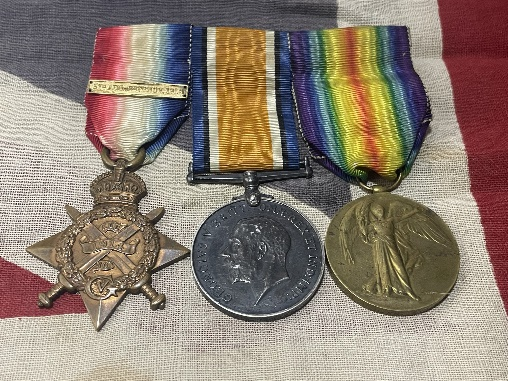
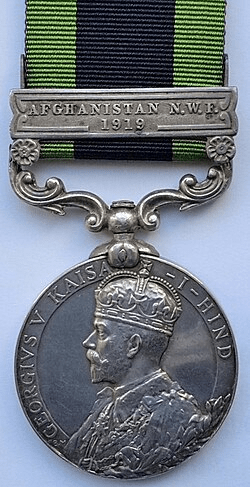
Sydney Bacon would have been awarded the following medals for his service In the Colours.
India General Service Medal 1908-1935 (Green and Blue Ribbon)
1914 Star with bar 4th August -22nd November and a rosette on the ribbon denoting under fire
British War Medal (Blue black white and orange ribbon)
Victory Medal (Rainbow coloured ribbon)
References. National Archives: Find My Past: Ancestry: Great War Forum: (AM)
********************************************************************************
Robert Henry Secker
1st Battalion Essex Regiment
Robert Henry Secker was born in July 1897 at Stradsett Norfolk to parents Robert and Alice Secker (nee Clarke 1867 -13/04/1911)
The 1901 Census shows:
Robert Secker Head aged 36 a Steam man and Agricultural labourer
Alice, Wife,34, Jessie, Daughter, 12, William John, Son, 10,
Robert, Son,4, Harriet Ada Daughter, 1.
The 1911 Census showed the family living on the Swaffham Rd in Fincham
Robert Secker Head aged 47 Agricultural Labourer Alice Wife aged 43 Robert Henry son aged 14 occupation Cowboy, Harriet Ada daughter aged 11 (Born 1894). Frederick Clarke son aged 9 (Born 10thDec 1901 died 1982) James Robert Son aged 7 (born 7th Feb 1904 died 1981). Florence Ada, granddaughter aged 6. Charles Easter son aged 5 (born 15th April 1906 died 1974) Arthur John son aged 1 month (born 21st March 1911 died 1969)
It is reasonable to assume that Robert Secker attested in Norwich on or before 15th January 1915 and issued with service number 20555. Although his service papers have not survived. By coincidence one Edward John Butters from Beachamwell attested on the 9th January 1915 and was issued with the service number 20578, only 23 digits different and to the same regiment.
The War had been running since August 1914 and there was a big recruitment campaign. Head of the British Army Lord Kitchener had the famous slogan “Your Country needs You.” Also life as a farm labourer was very hard and badly paid. There was a significant campaign to prevent farm workers from joining up as it was felt their contribution on the land was equal to that of soldiers fighting on the front line.
After initial training in Norwich Robert was posted to Aldershot with the Battalion and then onto Winchester to complete his basic training.
From Winchester the 1st Battalion were posted to Plymouth and Robert et al were transferred to the 1st Battalion Essex Regiment and renumbered 20578. This was to replace huge casualties from the Dardanelles Campaign (Gallipoli) sustained by the 1st Battalion Essex Rgt both from fighting and disease.
On the 30th July 1915 Robert joined a draft of men on a requisitioned steam liner, the Hired Military Transport (HMT) Royal Edward. This liner had brought the first Canadian Troops from Canada to join the fighting in France and was now requisitioned to transport troops to the Eastern Mediterranean.
The intention was to land at the Large Harbour at Mudros on the Lemnos Island and use smaller vessels to transfer men and equipment to Gallipoli in order to silence the Turkish Guns preventing the Royal Navy from entering the Bosphorous.
The Royal Edward was loaded to beyond capacity carrying 1400troops and a crew of 220. Initial progress was good the Royal Edward made a coaling stop in Valetta Malta, before arriving in Alexandria on 11th of August to drop of supplies and re- provision. On the 12th of August the Royal Edward departed Alexandria heading North West estimating arrival in Bodrum on the 14th August 1915.
Submarine Activity
German Submarine activities were confined to coastal patrols with smaller submarines. They were underpowered and unreliable, having been manufactured in Northern Germany in kit form and then assembled having been transported by train to the Mediterranean. They also only carried two torpedoes and being underpowered they were unable to chase any surface vessels.
U 14 (U standing for Unter Sea Botten) was captained by a 25yr old Oberleutnant Heino von Heimberg, an experienced sub mariner set sail from the port of Pula on the 7th of August and had already sunk an Italian heavy Cruiser, the Amalfi using one torpedo.
On the 12th August a number of potential targets came within range of U14 and her crew, but they were identified as Hospital ships carrying casualties from Gallipoli to Hospitals in Egypt and Malta so were not targets.
HMT Royal Edward
Dawn on Friday 13th August was also the 13th month of the war and found the Royal Edward, North of Crete between the Cyclades and Dodecanese Islands and approximately 100 miles west of the Port of Bodrum.
The daily lifeboat drill was carried out early due to the high temperatures and the ships log records at 10.30 all hands were below decks storing lifejackets in their respective quarters.
HMT Royal Edward
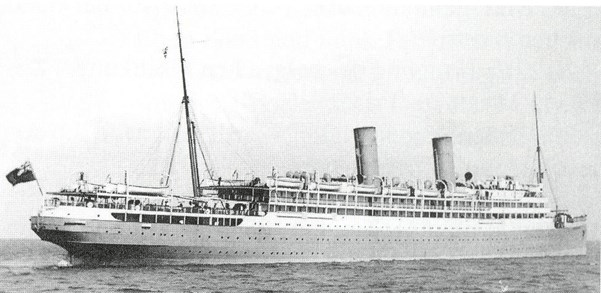
At this time U14 launched her torpedo which struck the Royal Edward on her port side on the rear quarter below the main mast. It inflicted a mortal blow and within 5 minutes the Royal Edward had broken her back and sunk taking many of her troops and crew with her. It was a huge loss of life, the sinking taking place before many of the lifeboats could be launched. Added to this a number of surface vessels in the area that witnessed the explosion and sinking refused to stop and pick up survivors for fear of becoming targets themselves.
U14 and her crew

Both local and national newspapers were quick to carry the story
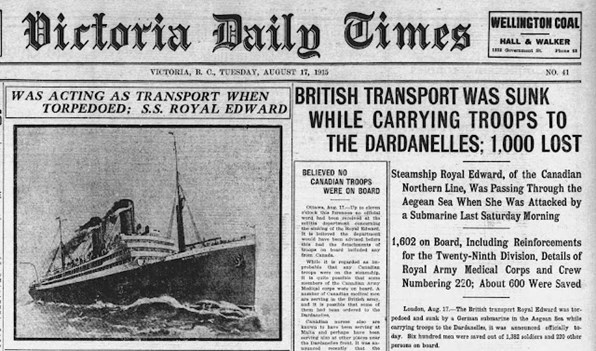
This ranked as one of the worst maritime disasters of the First World War with nearly 1000 deaths.
References: Great War Forum : Ancestry: Find my Past: National Records Office (AM)
****************************************************************************************
Ernest “Ernie” Lankfer
L/Cpl 202592 Highland Light Infantry. KIA 26.Oct 1917
The 1901 Census showed the family living on Railway Rd. Downham Market.
Ernest Lankfer was born on the 14th Sept 1898 to parents Frederick Charles Lankfer and Maud Elizabeth (nee Kent) at Railway Road ,Downham Market . He was baptised in the St Edmunds Church on 16th Oct 1898 by the Curate, Rev A Hammond.

This is from the 1901 Census showing Ernest living with his family in Railway Road Downham Market.
Frederick Charles Lankfer Head Age 28 Occupation Baker and Farmer Born Wisbech
Maud Elizabeth Wife Age 26 Born Kings Lynn
Ethel Daughter Age 4
Ernest Son Age 2
Florence Hall Visitor Age 14
Ernest was a keen sportsman and excelled at athletics, cycling and rugby, He appeared in both the Lynn Advertiser and Downham Market Gazette as winning prizes for his sporting achievements from 1909 to 1913
The 1911 Census showed an extended family, the address remained the same as earlier.
Frederick Charles age 38 Head Occupation Baker-Maud Elizabeth age 36 Wife Ethel Age 14 Daughter – Ernest Son Age 12 – William Son Age 9 Grace Daughter Age 7 – Elsie Daughter Age 5 – John Frederick Son Age 3 .
Ernests’ military service is speculative as his service papers did not survive the Blitz in 1940/41. However an educated guess can be made on looking at surviving records. Ernest was initially issued with service number 3014 by the Norfolk Regiment (5th Territorial Battalion)
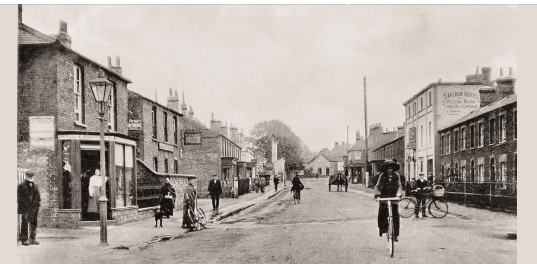
Pte Bertram Whitehouse attested on the 16th Sept 1914 at East Dereham and received the service number 3010 and Pte Alfred Nickerson enlisted on the 19th Sept 1914 and was issued with the service number 3032 so it is reasonable to assume an enlistment date on or around September 16th 1914 when he was aged 16. He would not be able to serve in an operational theatre until he was 18.
Shortly after joining the Norfolk Regiment Ernest, along 59 other Territorials was transferred to the 5th Battalion Northumberland Fusiliers and posted to Hexham in Northumberland, The Northumberland Fusiliers were the second largest Regiment of the British Army and had been heavily involved in fighting right from 1914.
He appeared in a list of both the Downham Advertiser and Lynn Advertiser of Dec 24th 1915 showing the names of local men serving in the armed forces.
Due to Ernie s age the earliest posting into an Operational Theatre would have been Sept 1916 (Aged 18). He appears to have joined a draft of replacements following heavy casualties sustained in the Somme Campaign.
The Battalion War Diary records the Unit as being based near Freicourt Belgium. It records the poor weather and the men’s morale sagging due to wet conditions, tents and trenches with heavy bombardment from enemy Artillery.
Within a short period of time Ernest is severely wounded, his name appearing in a published casualty list in the Lynn Advertiser of 16th November 1916 This suggested the date of becoming a casualty would be mid October 1916 and again this tied in with the War Diaries reporting heavy fighting, attacks and counter attacks. There was no mention of any Gas attacks so the assumption is that he wounded due shellfire or other enemy action.
It is likely that he was repatriated to the UK for recouperation, but exactly where is not recorded. He also did not suffer from “shell shock” as there was much stigma attached to such a diagnosis and these men were listed separately!
Ernest’s return to the front was lost with his service record, but he has had sufficient time recuperating that that he was then transferred to the 18th Battalion of the Highland Light Infantry to replace casualties from the 3rd Battle of Ypres (Passchendaele) which was still in progress (ended 10th November 1917).
The Battalion war diary for October 1917 recorded the Battalion being in and out of the front line near Bazentine Le Grande being involved in some heavy fighting.
L/Cpl Ernest Lankfer was killed in action on the 26th of October 1917. The War Diary recorded moderate shelling, but also recorded attacks by enemy aircraft on the Trenches with a number of casualties falling to machine gun fire from the aircraft.
Ernest was one of 12 fatalities on that day from the 18th Battalion Highland Light Infantry. His body was never recovered.
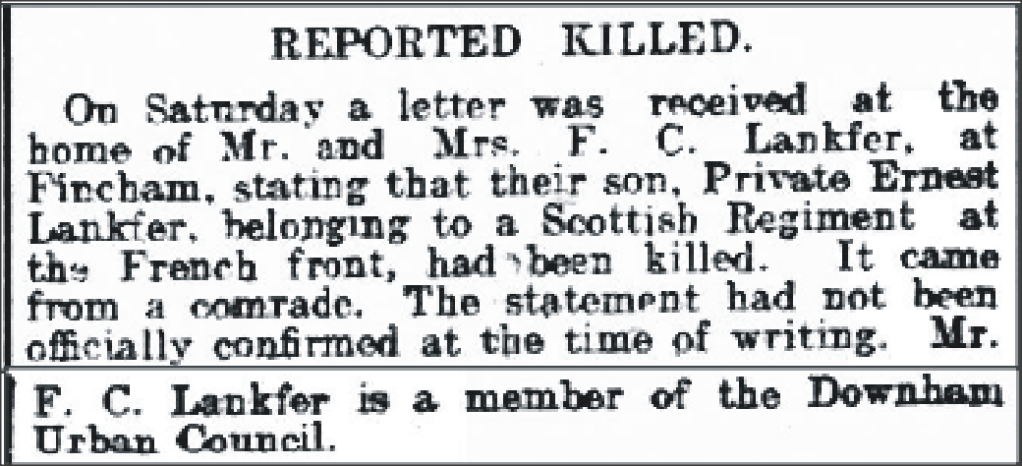
The Army initially posted him as “Missing” and delayed paying out a pension to his father. However on November 17th 1917 Mr & Mrs Lankfer received a letter from one of Ernest’s colleagues saying he had been killed in action, this was recorded in the Lynn Advertiser of 18th November 1917.
****************************************************************************************
Harry Jude
1st Battalion East Surrey Regiment
Missing / KIA 05/09/1916
Harry Jude was born between July & September 1877 to parents John Jude and Sarah Ann (nee Middleton). At the time the small family lived in a farm cottage at 8 Swaffham Rd Fincham . The 1881 Census showed John Jude as an agricultural labourer aged 34, his wife Sarah Ann aged 34 , daughter Agnes aged 6 and son Harry aged 4.
In 1891, at the same address John Jude was a horseman, leading a team of ploughing horses and son Harry was an errand boy.
In 1901 Harry was living as a boarder at a property in Hampstead, the head of the household Rosella Dowes, appears to have no close connection to Harry or his family. Harry was listed as a dairyman; there were three other boarders at the property all dairymen.
In 1911 Harry aged 34 was still single and listed as a boarder at 103 Cherry Orchard Rd Croydon. He was still working as a dairyman.
on 7th November 1915 Harry enlisted at Guildford in Surrey and was posted to A Company 4th Battalion East Surrey Regiment . His training would have taken place at the regimental headquarters in Guildford .
Harry completed his training and was posted to France joining a draft of 30 + men most of whom were returning to the front following recovery from injury or illness .On the 9th of August 1916 Harry was with the 4th Battalion which was transferred to 1st Battalion to cover losses sustained in the early days of the Somme Campaign (1st July 1916) .
The Battalion entered the front line during the middle of August 1916 and were heavily engaged in attack and counterattack close to “Mametz Wood”
Mametz is in the Picardy region of Northern France approx. 32 Km Northeast of Amiens and 5 Km East of Albert. The Battalion war diary reported that the 1st Btn had taken over a good trench system, but there were numerous references to poor weather and heavy enemy shelling.
A large attack was planned for the night of the 5th September when along with the Devon Regiment, the East Surrey Regiment would advance under a “Creeping Barrage” .This term refers to a supportive artillery barrage where the artillery shells fall in front of the advancing British troops causing the enemy to flee or risk being blown up. However the diary noted the creeping barrage was not advancing fast enough and a number of British shells landed amongst the advancing troops causing several casualties.
Having reached their objective and secured the forward trenches Captain Robinson took 6 men out on a reconnaissance patrol . It was dark, raining heavily with no form of guide and there was sporadic enemy fire.
It was assumed that during this patrol Pte Harry Jude went missing. The Army initially posted him as missing in action, believing that he was possibly a prisoner of war . A pension request was submitted by Harry’ s mother, but not paid by the Army until 10th January 1917, when his records were annotated “Death Presumed”. The pension was awarded to Sarah Jude, Harry’s mother as his father John had died in 1907.
Sarah did not benefit from the 4 shillings and 6 d for long, she died in 1923
The Cap Badge of the East Surrey Regiment
References
Great War Forum: Find My Past: Ancestry: National Records Office: British Newspaper Archive.
 Fincham Local History Society