The Rectory is next to the site of St. Michael’s and was that church’s Rectory until the demolition of 1745. It then became the Rectory for St. Martin’s.
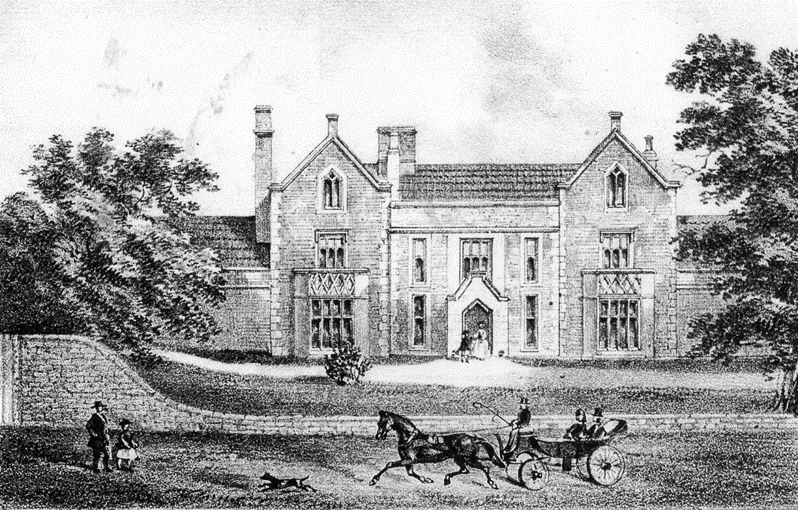
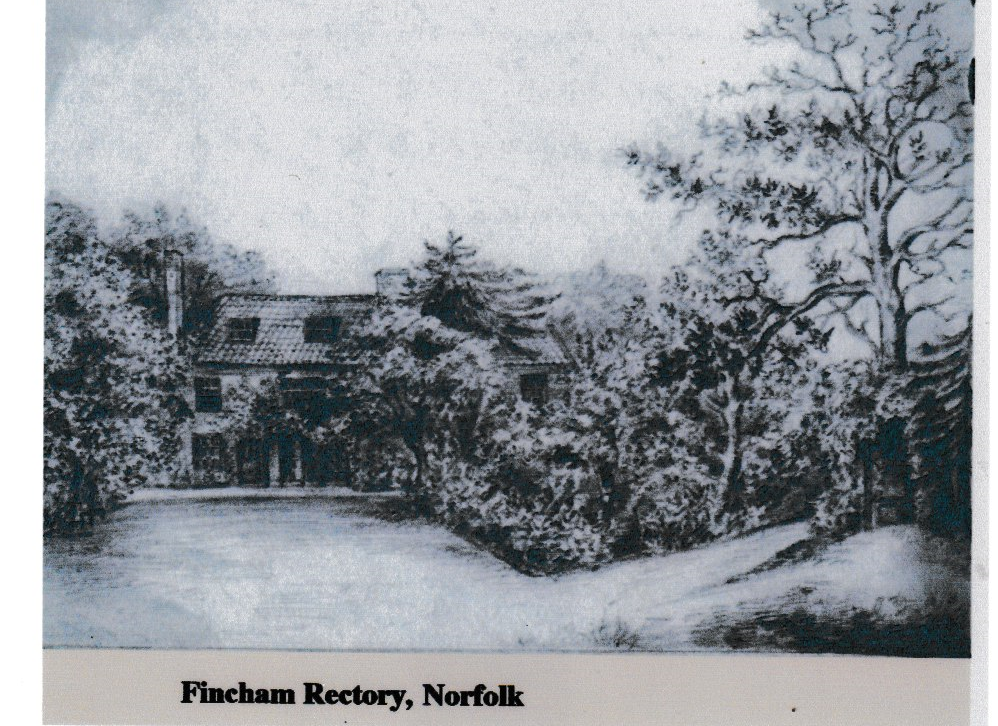
The lithograph in Blyth’s book of 1863. It is probably from a few years earlier.
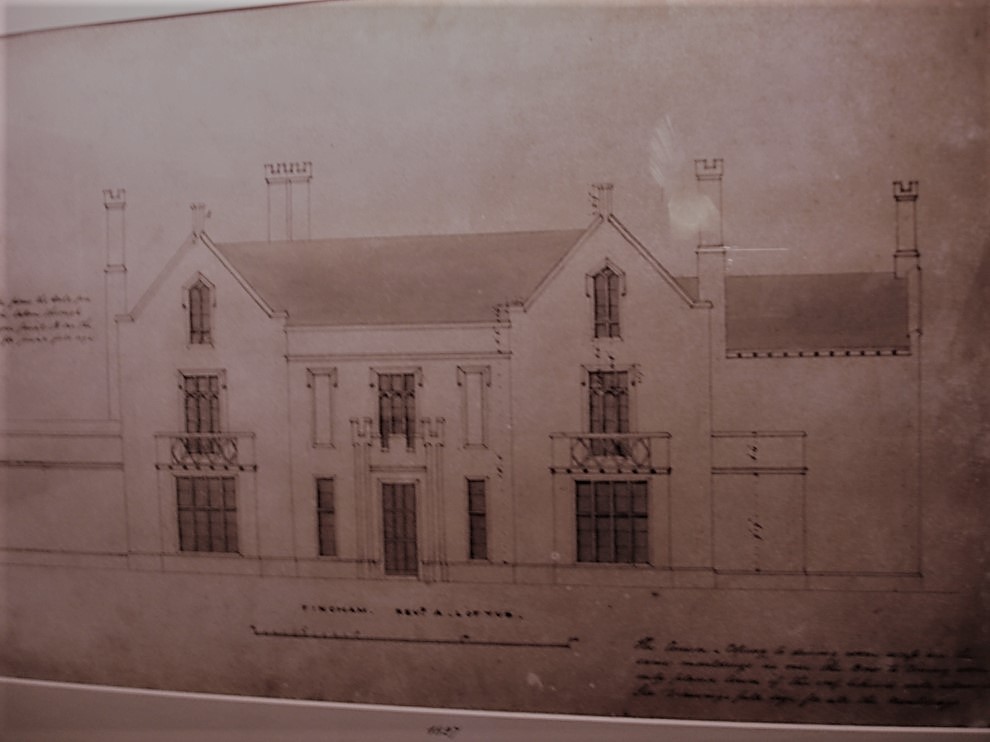
This is the design for the new front by the architect William Donthorne drawn in 1827 for Rev Arthur Loftus. The castellated tops to the chimneys were not done although they were typical of several other Norfolk designs of his.
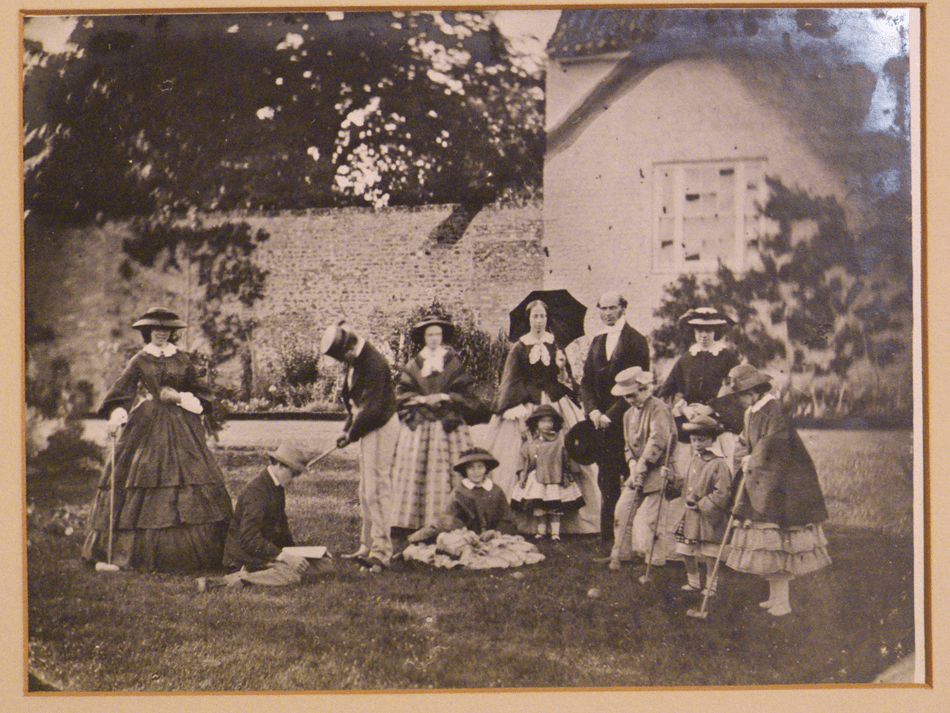
The Blyth family in the garden c.1860
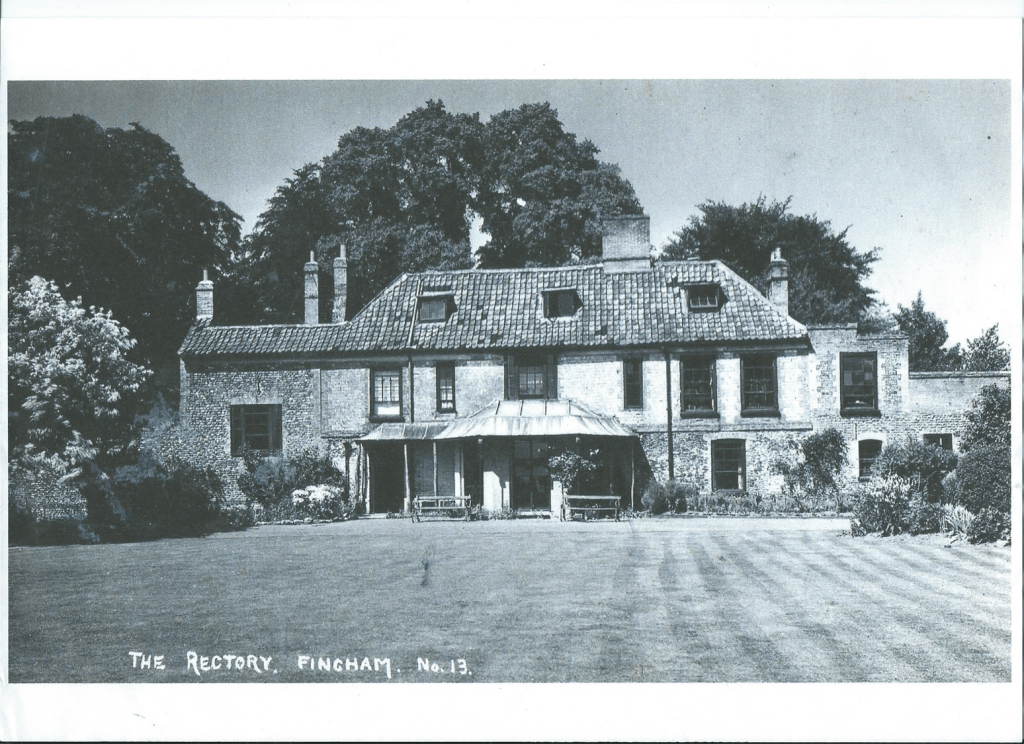
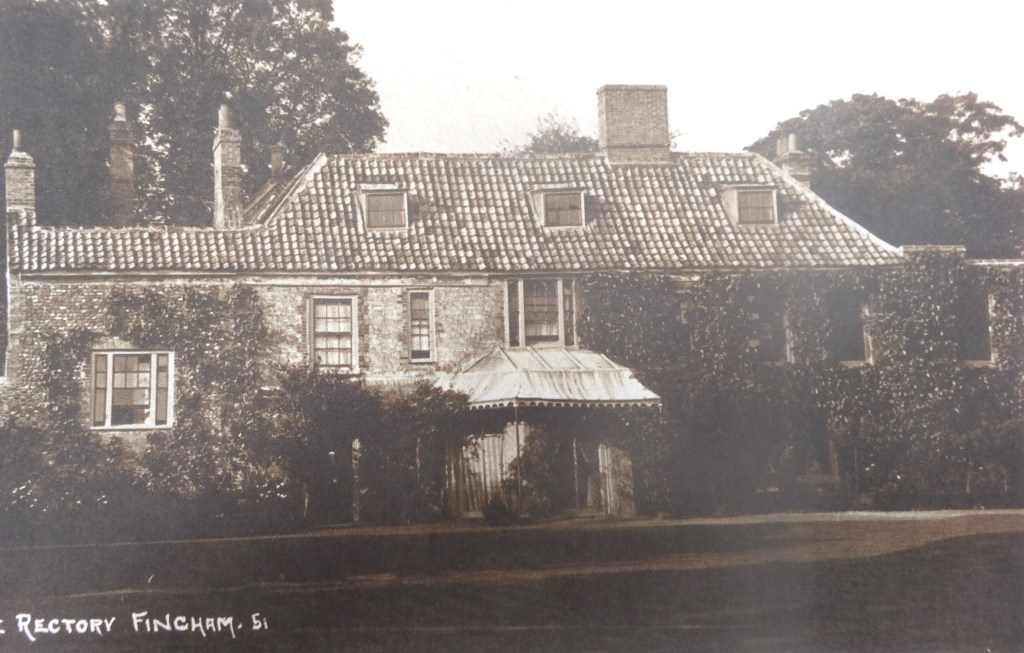
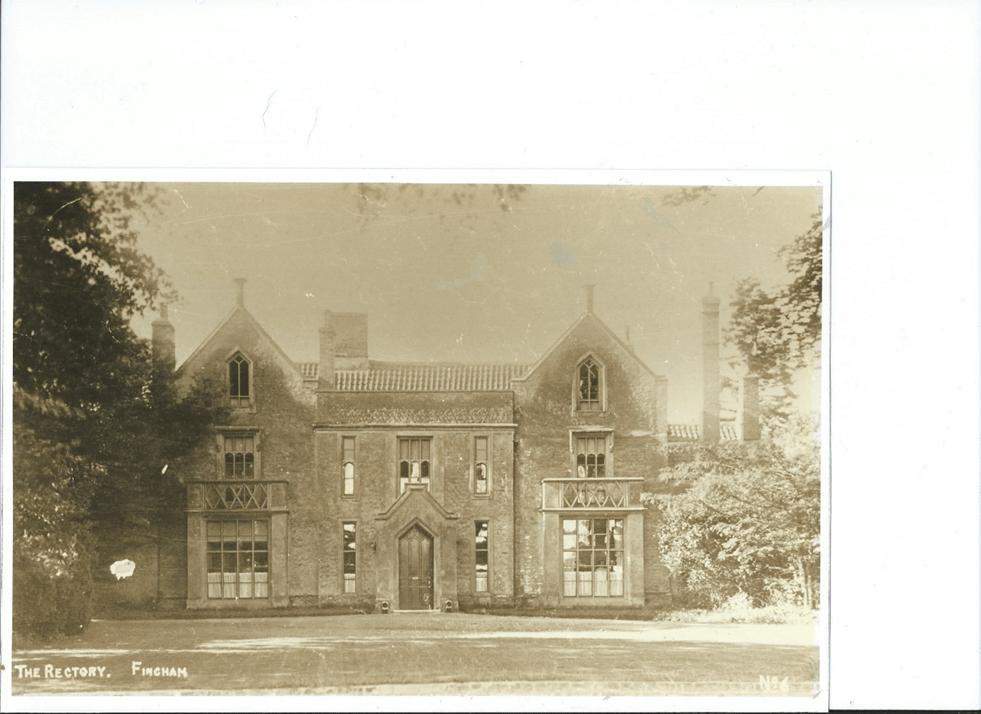
Another early 20th century view
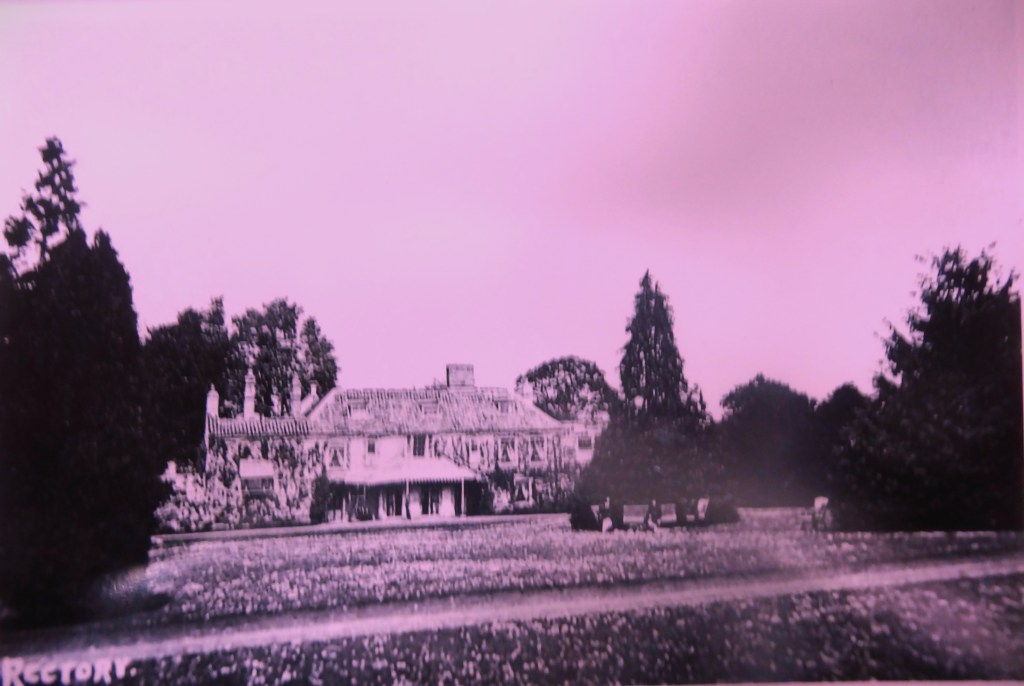
This view taken from the field and seems to show the ha-ha wall.
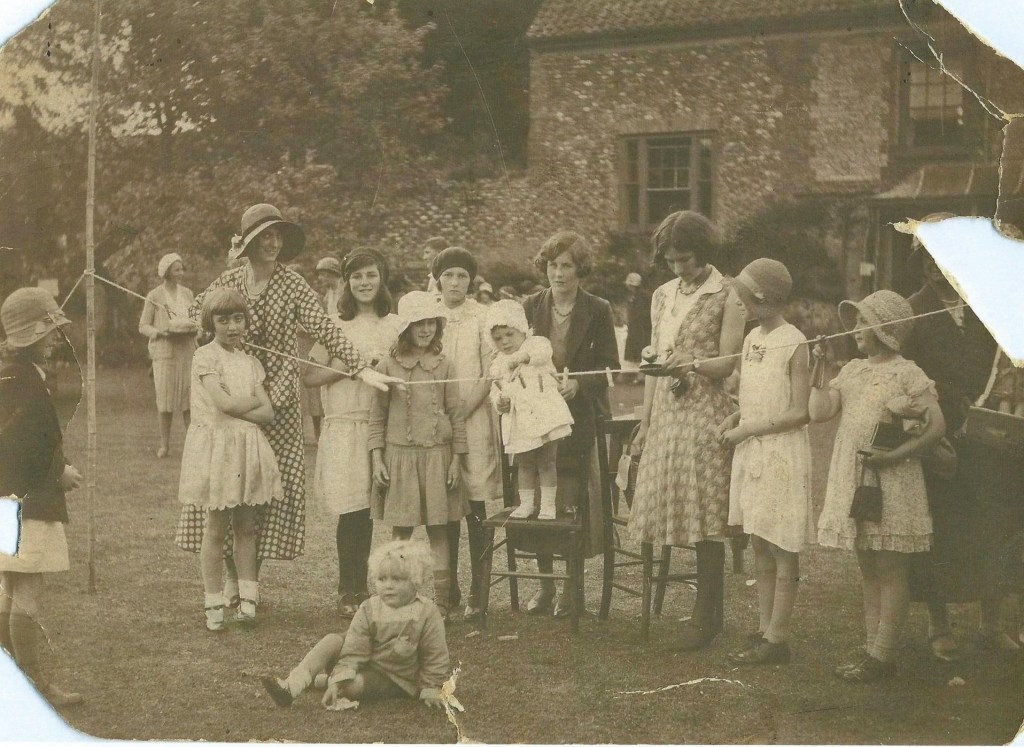
Simple entertainment at the Summer Fete
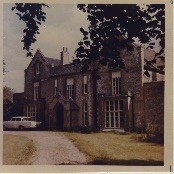
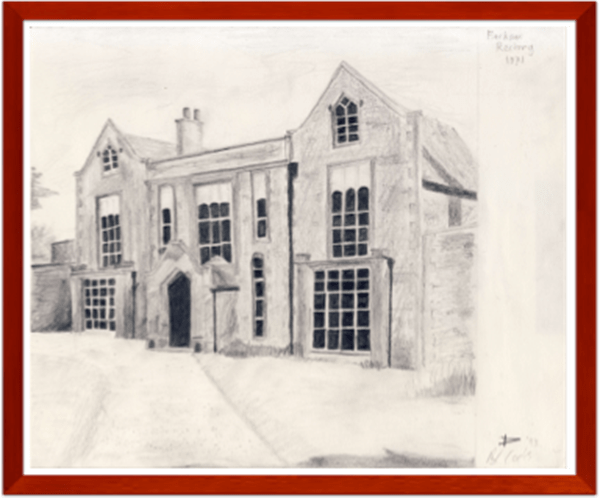
The Rectory during the time of Rev Stanley Gordon Bennett 1970-78 as is this drawing

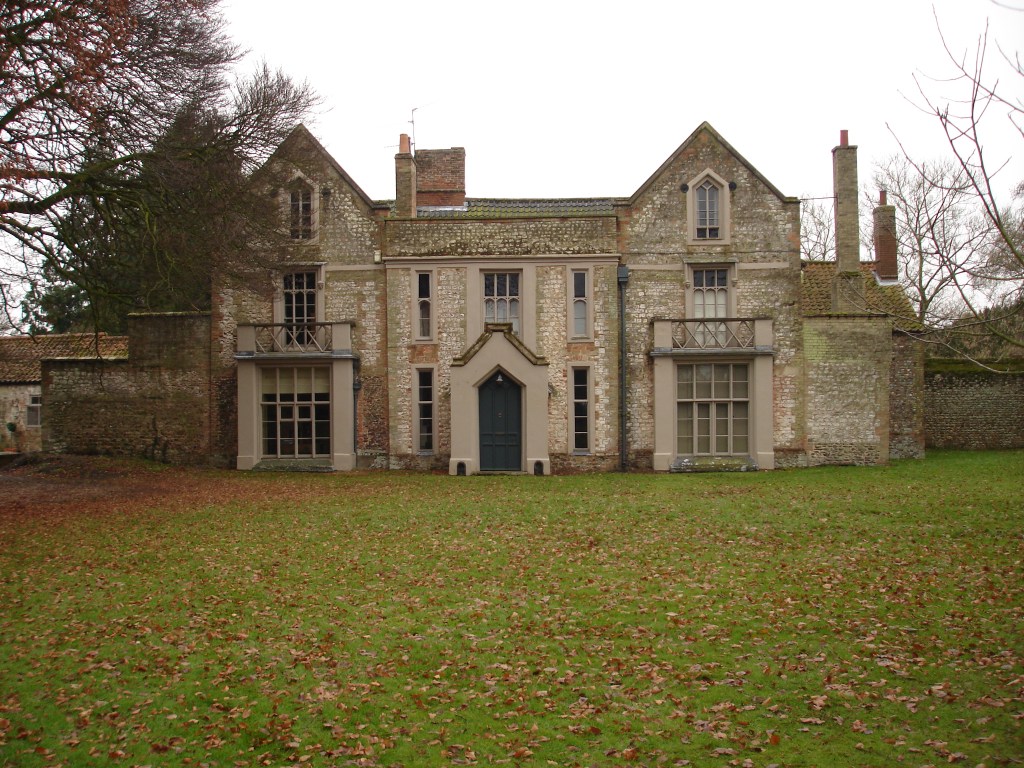
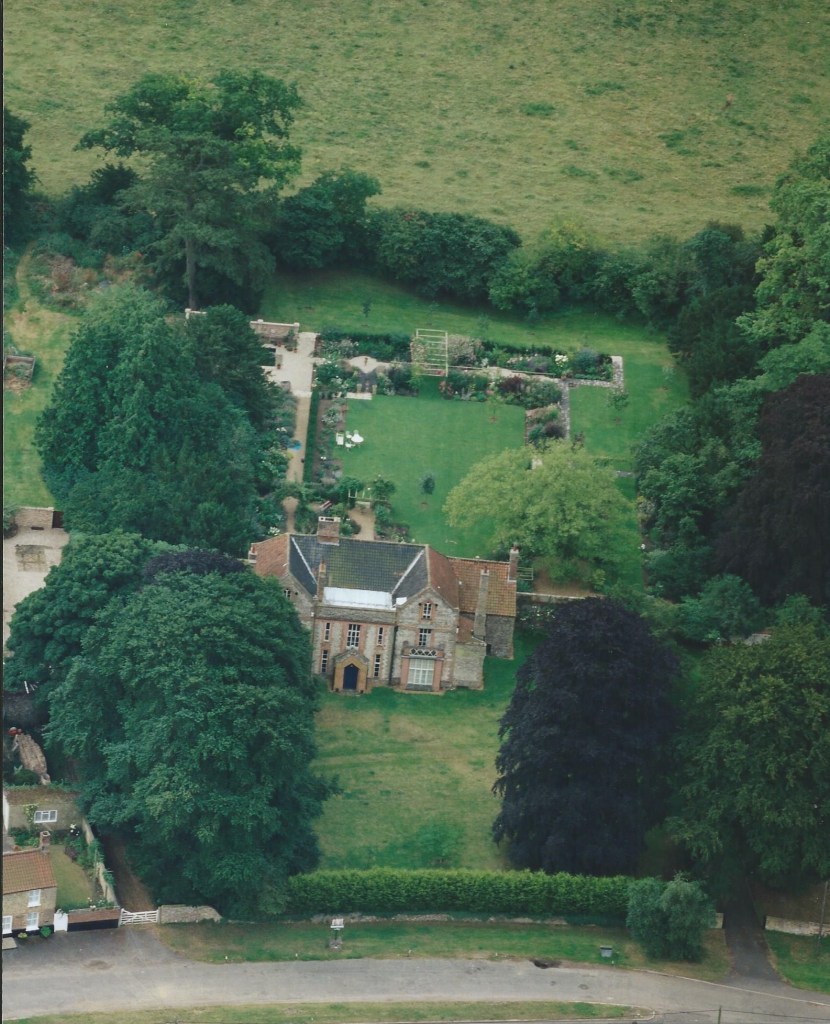
The Rectory c. 2000 with the Glebe fields beyond
***********************************************************************************************************
Terriers for the Rectory, Fincham. These were inventories of what the Church owned and were taken at intervals over the years. These are extracts from ones about the ‘Parsonage house’ or Rectory, in Fincham. They reflect the wealth of the Rectors and the ‘self-sufficient’ nature of their premises.
1706
Parsonage house, one barn, one stable and other outhouses thereon abutting towards the north on the highway and street of Fincham and towards the south on Inhams Lane, lying between the lands of Thomas Creasy on the East and the lands of James Mitchell in part and on the churchyard of St. Michael’s in part on the West.
1747
The site of the Rectory, that is the House, barn, stables, Dovehouse Hog styes etc with the Gardens and homestall lying between the lands of James Barsham on the East and Thomas Spencer on the west, abutting north on the Common Street and south on Inhams Lane.
1813
First the site of the Rectory that is to say the Parsonage House built of brick and stone and covered with tiles about 51 feet long and 30 feet wide together with 2 wings that on the East side being 12 feet long and 8 feet wide and that on the West side 15 feet square built also with brick and stone and covered with tiles.
(This entry confirms the original shape of the Rectory before the front was altered in 1827)
The Outhouses East of the dwelling house consisting of a Wash-house and dairy, coal house, wood house and dovecote built of stone and covered in tiles.
The outhouses west of the dwelling consisting of stables, straw house and cow-house built of brick and stone in part and of wood in part covered with tiles in part and in part with thatch about 120 feet long and 16 feet wide together with the yards and gardens containing by admeasurement two acres three roods and ten perches.
1827
East – laundry and a larder both adjoining the dwelling house, a wash house and dairy with granary over them, a coal house and wood house and a dovecote all brick stones and tiles.
Likewise stables, coach house and hay loft over them built of brick and stone and covered with tiles, straw house, cow house and three stalled stable and hay loft over them covered with tiles and sundry lean-to’s on the north side of the garden wall one of them adjoining the west wing of the dwelling house and a small building at one corner of the garden all built of brick and stone and covered in tiles.
1872
Outhouses East of dwelling house consisting of wash house and dairy, a coal house a wood house and a round house or dovecote, also detached and East of said dwelling house there is a four stalled stable with coach house attached and hay loft over them and a small brick building at the back or south side of the same abutting upon the garden. Also on west and attached is a small barn with three stalled stable or cow house attached with a hay loft over it and wood house attached. Also a lean to on the opposite ide of the yard attached to garden wall and used for fowls etc.
1912
-on west side and detached is a small barn with three stalled stable or cow house attached with hay loft over it and gig shed now used as a Parish Room.
 Fincham Local History Society