The first mention of a Postmaster in Fincham is in 1846 when “a George Aylmer of Fincham near Downham” is noted in the index of the UK Postal Service Appointments book. The first mention of a Post Office is in 1854 when White’s Directory states that the Post Office is at George Aylmer’s Grocer and Draper. The 1839 tithe map shows George Aylmer’s shop where the Old Police House and the West Wing of Ivy House is now (Plot 7 on the map). Given that George Aylmer is mentioned in White’s Directory of 1836 and also in that of 1845 as being a grocer and draper in the village we can probably assume that he was the receiver of post before 1854 as well. The last mention of George as the postmaster is in Craven’s Directory 1856 as shopkeeper and postmaster.
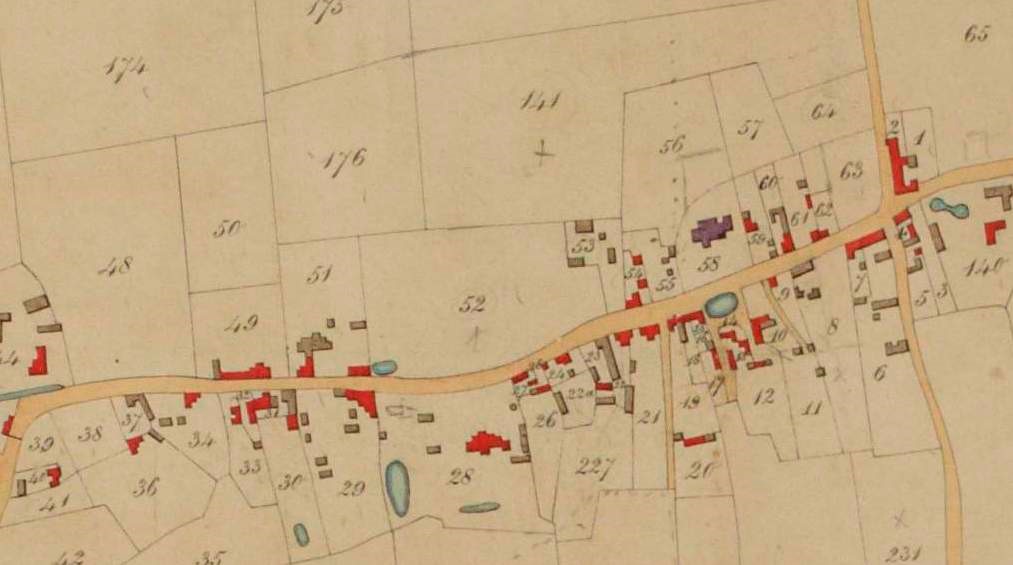
George’s wealthy uncle, a local farmer and landowner (George Aylmer Senior), died in 1852 and George was able to sell his draper’s business and set up as a farmer, moving with his unmarried sisters to Moat House one of the larger houses in the village.
The next recorded post office was in the house of Ann Hubbard, a 50 year old widow, who lived at the other end of the village to George Aylmer. In his diary on 28th April 1855 William Blyth writes.
Mrs Hubbard appointed post mistress through my recommendation to L. Leicester.
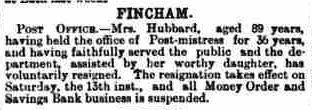
She first appears in the records in Kelly’s Directory 1858. The 1871 census gives her address as 1 Post Office Yard.
The Census of 1891 shows her as Post Mistress three years before her death in 1894 having retired in 1891.
Ann Hubbard was born in the village in 1802. Her father, Isaac Malby was a local farmer/smallholder who had married three times. Ann was the daughter of the second marriage and as his only surviving daughter Ann inherited money and property when Isaac died in 1810. In 1823 Ann married William Hubbard, a local carpenter, (there have been Hubbards in Fincham since at least the 16th century) She was still under age but married with the permission of her mother and presumably soon came into her inheritance at the age of 21.
William was one of the respectable tradesmen in the village as is shown by his signature witnessing some of the wills of the larger landowners of Fincham. The previous curate of Fincham, the Rev Balls, was staying with the Hubbards when he died, and William is one of the few whose death and burial in 1852 is mentioned in the diary of the Rev. William Blyth. As the wife of a skilled tradesman Ann would have had a comfortable enough life in the village. Although she is noted in the census of 1861 as an annuitant this does not mean she was of independent means and presumably she needed to run the post office for financial reasons.
William and Ann had two children, William and Mary Ann. William Hubbard (jnr) moved to East Dereham where he founded his own thriving building business. Mary Ann continued to live with her mother and never married. She is mentioned on the various censuses as a seminarian, teacher and an assistant in the post office.
When Ann died in 1894 she left effects worth £260 in her will. Her unmarried daughter Mary went to live with her brother William in East Dereham but died in 1898 and was buried in Fincham.
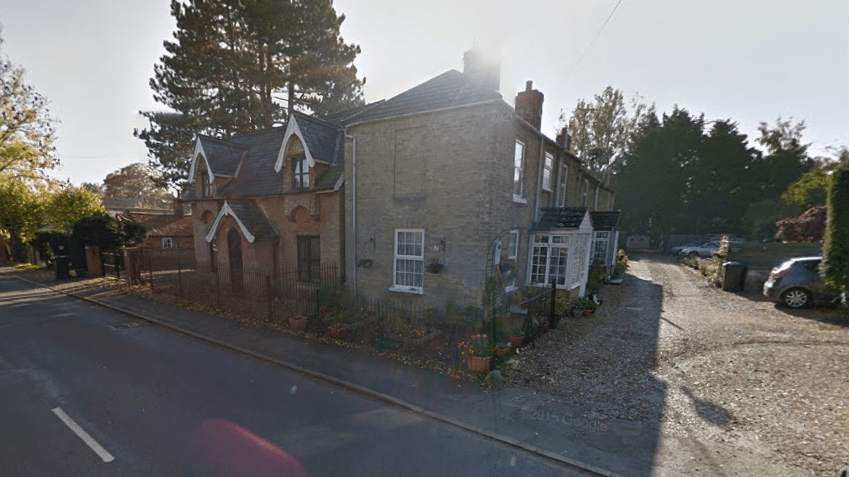
The Post Office moved to the house of Henry Laws, tailor. The house is now known as “The Old Post Office” His son Robert Henry Laws is mentioned as Postmaster in the 1892 and 1896 Kelly’s Directory but by the 1900 Kelly’s directory and the 1901 census his sister Martha is named as the sub postmistress aged 46 years. In the 1901 census Robert is still living in the village with his wife and family and is listed as a tailor but in 1913 he filed for bankruptcy, claiming that when he bought his father’s business Henry was already in debt.
Martha is listed as Postmistress in 1916 but died in 1922. The photograph of the Post Office (undated) is supposed to show James Bywater as the postman. The older man on the left is Henry Laws, Martha’s father.
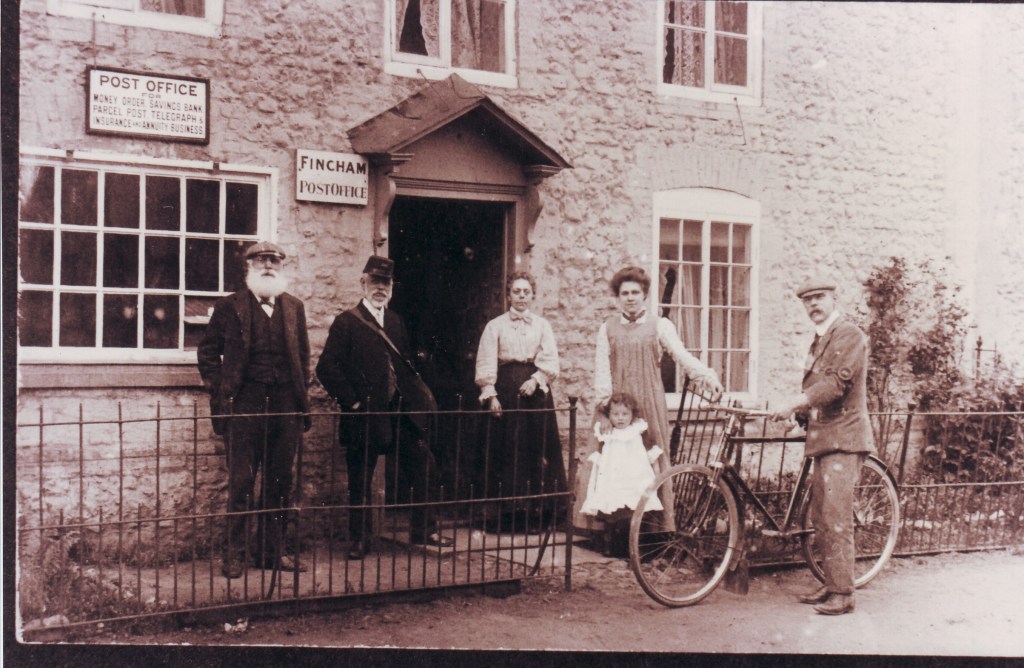
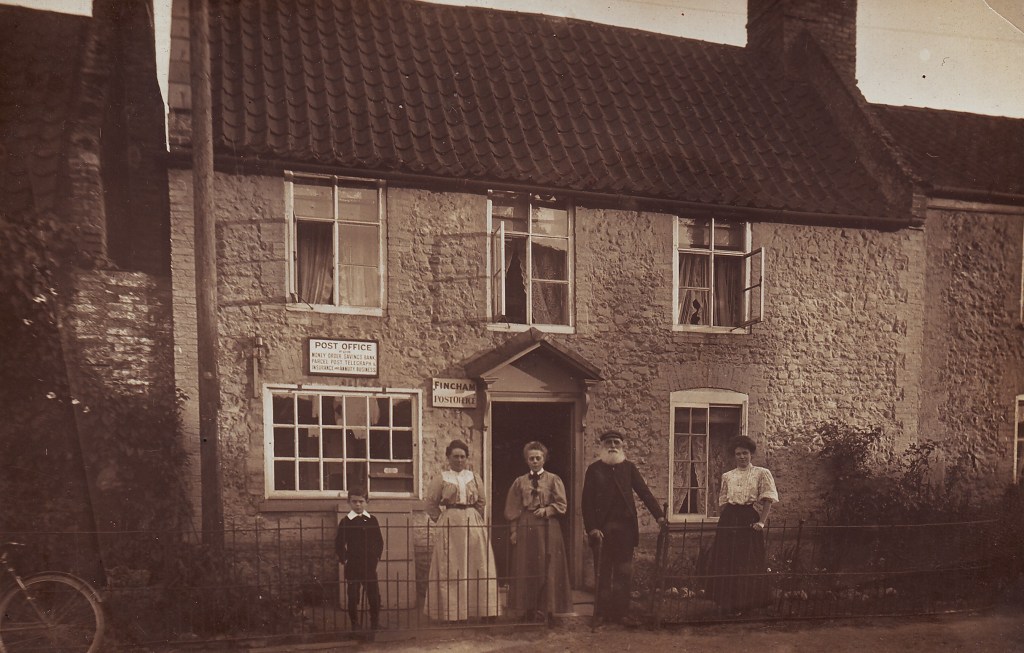
James Bywater was the son of James Bywater, one of the village bakers. He had left the village and joined the Royal Navy and was subsequently employed as a footman and butler in various households. By 1925 James Bywater appears in Kelly’s Directory as sub postmaster and tobacconist .He is still listed as sub-postmaster in the 1939 Register and the Post Office was still at the house that was originally the home of Henry Laws.
The Post Office moved twice more. Once to the general stores near Talbot manor and then more recently to the remaining village shop, Fincham Stores which was opposite the original site of George Aylmer’s grocers and drapers ‘shop
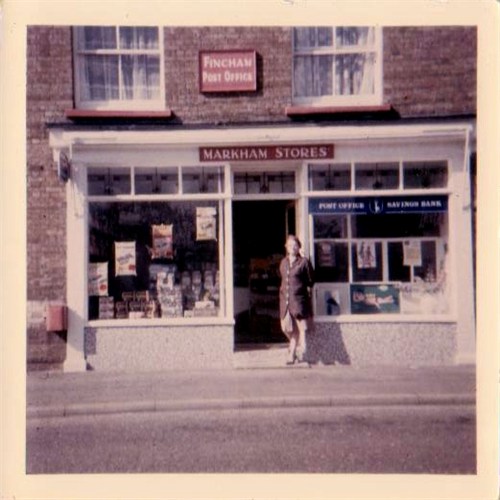
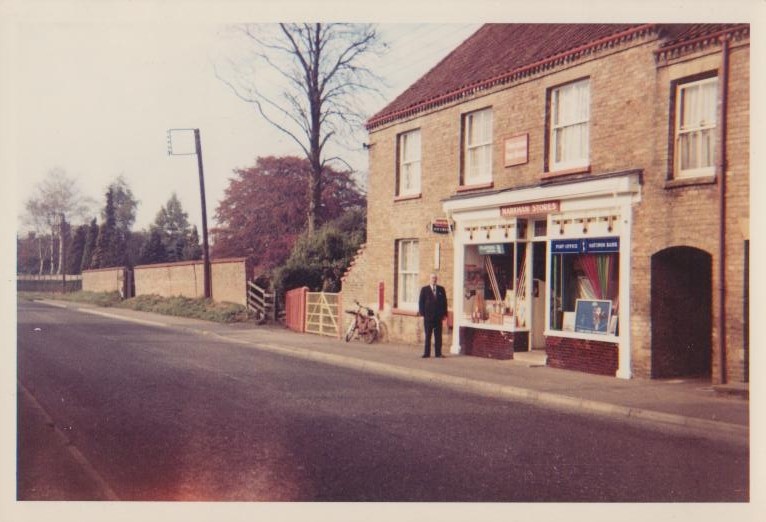
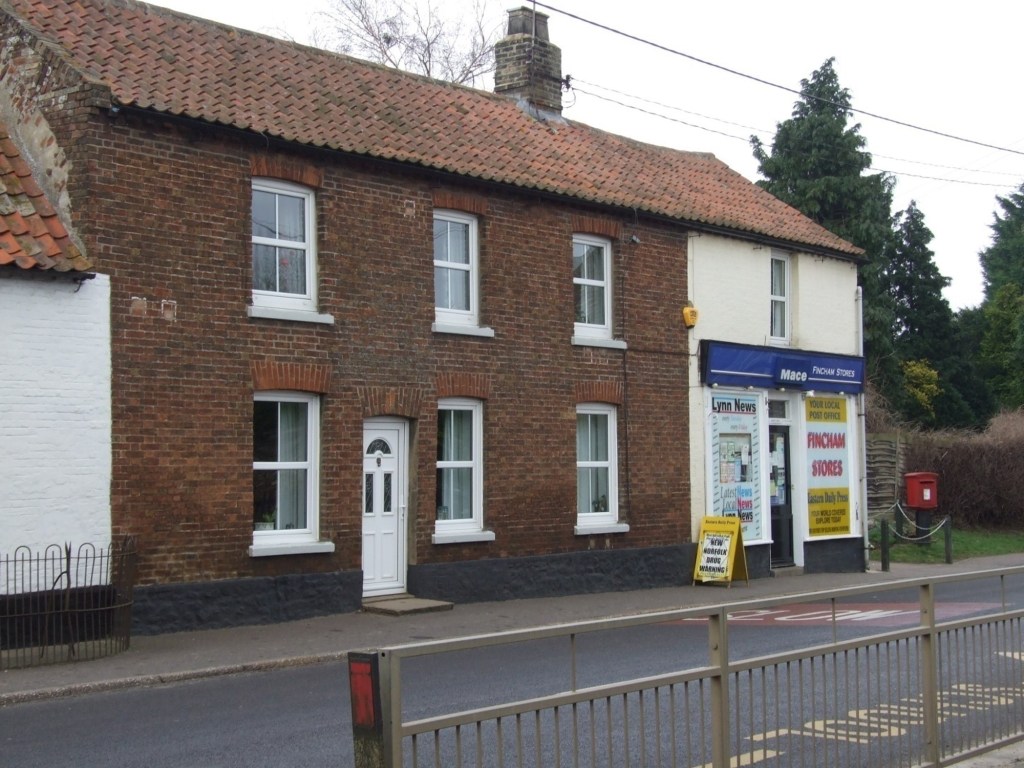
Fincham Stores closed in 2015 and the village is now served by a van which calls at Fincham 4 times a week.
 Fincham Local History Society